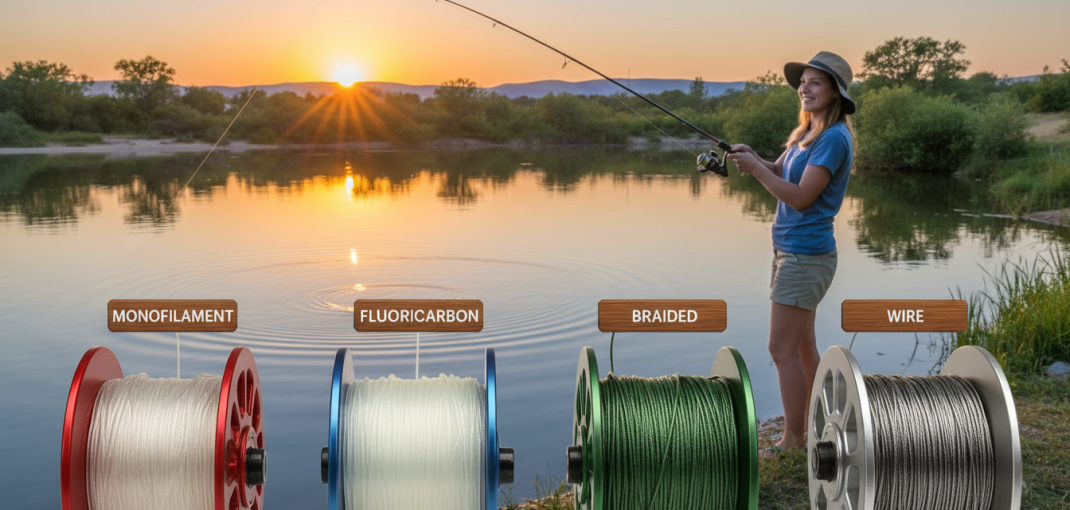
Choosing the right fishing line shapes every trip. If you’re new to angling in Australia, the choice between mono, braid and fluorocarbon affects casting, hooksets and your chances of landing fish. Start with practical factors: strength, diameter, abrasion resistance and visibility in water.
Modern lines have come a long way since horsehair was common in the 15th century. Today you can match a line to your reel and target species, whether you’re casting lures in estuaries or baiting impoundments.
Look at price and ease of use as well. SpiderWire Stealth Braid is popular among Australian anglers because it offers thin diameter and high strength. That makes it useful where you need range and sensitivity.
Spend a bit of time matching line memory, visibility and abrasion resistance to your techniques. Do that and you’ll make your gear work harder while you learn the ropes.
Key Takeaways
- Pick a line that suits your reel and local water conditions.
- Balance strength, diameter and visibility to match target species.
- SpiderWire Stealth Braid is a common choice for thin diameter and strength.
- Consider price and ease of use when buying new lines.
- Match line features to techniques to reduce tangles and lost fish.
Understanding the Best Fishing Line Types for Beginners
Your choice of cord affects every cast, hookset and moment on the water.
Start by separating the main categories: monofilament, braid and fluorocarbon. Each has a different feel, stretch and abrasion resistance. That makes some better for casting soft lures and others for heavy cover.
Australian anglers often switch lines depending on saltwater or freshwater conditions. A single spool rarely suits every session.
- Think about price versus performance; cheaper spools save money but wear faster.
- Match a line’s diameter and sensitivity to your reel and target fish.
- Spend a little time learning each option and you’ll reduce snags and lost fish.
If you feel overwhelmed, focus on core choices: a soft monofilament for forgiving casts, braid for range and strength, and fluorocarbon as a stealth leader. Categorise what you need by water and tackle, then pick the spool that fits.
Comparing Monofilament, Braid, and Fluorocarbon
Choosing the right material changes how each cast feels and how you fight a hooked fish.
Monofilament Benefits
Monofilament was invented in 1937 and remains popular because it is forgiving and easy to use.
It has natural stretch that acts as a shock absorber, which helps stop hooks pulling free. Berkley Trilene XL is a classic nylon mono well liked in both fresh and salt water.
The Rise of Braided Line
Braid gives very low stretch and high sensitivity. That lack of stretch helps you feel tiny taps from a lure or bait.
SpiderWire Stealth Braid is a common example; its 0.20mm diameter in 10 lb test shows how thin and strong braided material can be.
Fluorocarbon for Stealth
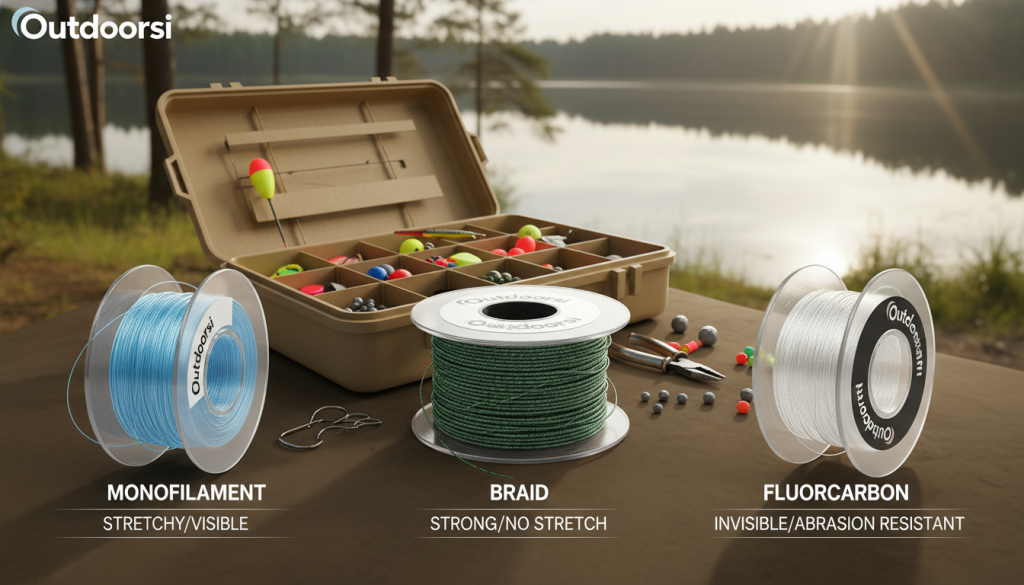
Fluorocarbon is denser than mono and sinks faster, so it helps get lures down to fish in clear water.
It is more abrasion resistant than monofilament and is often used as a leader tied to a braided main. Use the Palomar knot on braid to stop slippage.
- Mono: knot strength, forgiving stretch, cost-effective.
- Braid: thin diameter, range and sensitivity.
- Fluoro: low visibility, sink rate and abrasion resistance.
| Material | Key Trait | Best Use |
|---|---|---|
| Monofilament | Stretch, easy knots | General casting, shock absorption |
| Braid | Low stretch, high strength | Long casts, heavy cover |
| Fluorocarbon | Low visibility, sinks | Clear water, leader use |
Mixing materials — braid main with a fluorocarbon leader — is a practical way to get the sensitivity and stealth you need on your rod and reel.
Matching Your Line to Your Target Species
A well-matched spool gives you better casts, cleaner presentations and fewer lost fish.
Target hard-hitting species like barramundi with a stronger fishing line and higher pound-test. These fish fight hard and you need strength to hold them away from structure.
When you cast into heavy cover, pick a monofilament with extra pound-test to resist abrasion and sudden shock. Mono’s stretch helps absorb big runs.
The diameter matters if you chase wary fish. A thinner line is less visible in clear water and improves lure action.
- Use a fluorocarbon leader to keep bait presentation natural and hard to see.
- Choose braid when you need sensitivity and no stretch for deep-water bites.
- Always test knot strength—your knot is the most common failure point.
| Target | Recommended | Why |
|---|---|---|
| Barramundi | High-pound mono or braid | Strength and abrasion resistance |
| Wary estuary species | Thin-diameter fluorocarbon leader | Low visibility, natural presentation |
| Deep-water fish | Braid | No stretch, fast bite detection |
Start with a versatile spool that balances memory and strength. That choice keeps your casting consistent and covers most species while you learn local water and tactics.
Why Line Diameter and Abrasion Resistance Matter
How thin your spool is and how well it resists abrasion decide its real-world performance around snags. You want a balance that helps with casting and keeps your gear intact when you fish near rocks, timber or reefs.
Abrasion Resistance in Structure
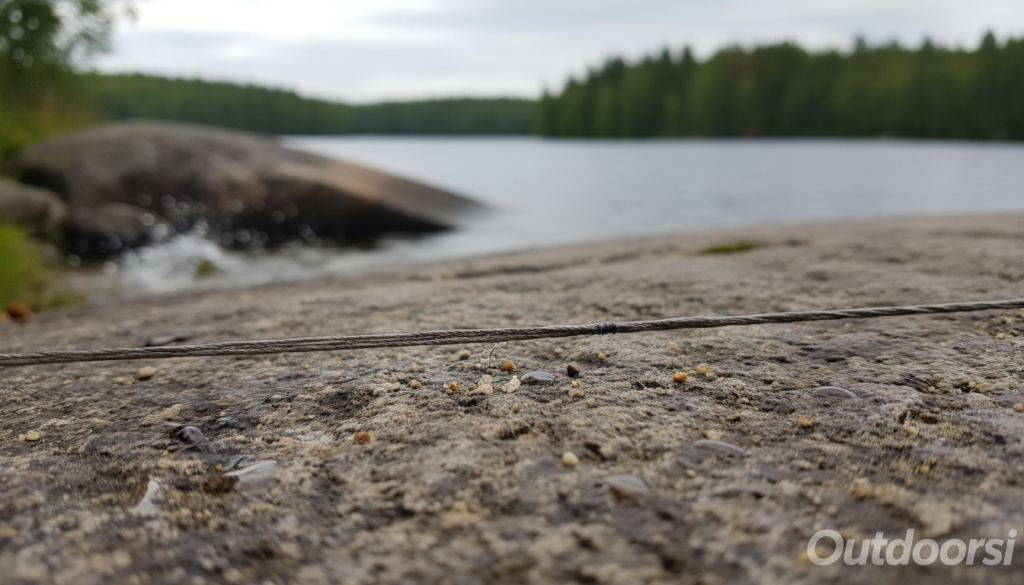
Abrasion resistance protects your spool when it rubs on sharp surfaces. Fluorocarbon is denser than monofilament and stands up better around sunken timber and sharp rocks.
That extra resistance reduces frays and breaks, so you land more fish and replace spools less often. Choose a material with proven abrasion resistance when you expect heavy cover.
Sensitivity and Feel
Sensitivity ties back to stretch and diameter. Braid offers very low stretch, so you detect light bites and feel the bottom sooner.
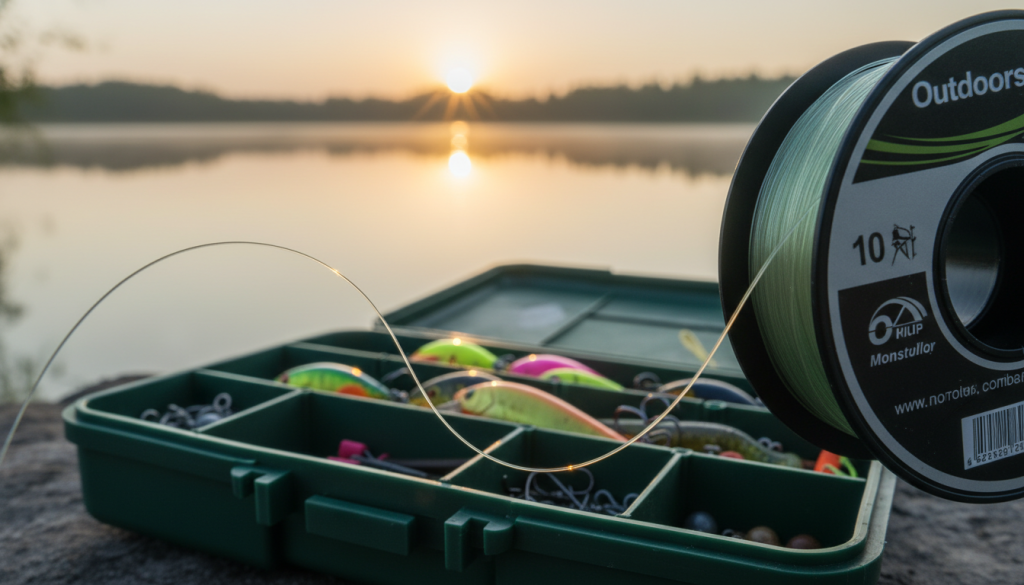
Thinner diameters — like Berkley X9 at 0.12mm in 10 lb test — cut drag and let your lure run truer in current. Monofilament gives some stretch, which helps absorb sudden runs and protects knots under shock.
- Diameter affects sink rate, drag and casting distance.
- Material decides abrasion resistance and sensitivity.
- Mixing a braid main with a fluorocarbon leader often gives the best blend of range and stealth.
| Feature | Braid | Fluorocarbon | Mono |
|---|---|---|---|
| Stretch | Low | Low to medium | Higher |
| Abrasion resistance | Good | Very good | Moderate |
| Diameter benefit | Thin, more range | Sinks, stealth | Shock absorption |
Managing Line Memory and Casting Performance
Line memory can turn an otherwise simple cast into a tangle that wastes time on the water. You’ll spot coils and loops that reduce distance and cause bird’s nests if you ignore them.
Braid has almost zero memory, so many Australian anglers pick a braided line to cut tangles and improve casting range. Thin diameter braid also slips through guides with less friction, which helps your rod and reel work together.
Monofilament line can take a set over time. Replace mono regularly to keep stretch and knot strength predictable. Fluorocarbon can feel stiffer than mono, so manage spool depth and check memory before a session.
Simple tips improve performance: don’t overfill the spool, swap old lines, and inspect for nicks. These steps keep sensitivity high and let your lure fly where you aim. If you check your lines often you’ll land more fish and spend less time untangling on the bank.
| Issue | Material | Action |
|---|---|---|
| High memory | Monofilament | Replace spool, avoid overfilling |
| Low memory | Braid | Use for long casts, pair with fluorocarbon leader |
| Stiff feel | Fluorocarbon | Manage spool depth, trim damaged sections |
The Importance of Using a Leader
Leaders act as the hidden link that lets you pair a sensitive main with an invisible tip. They protect your setup from abrasion and teeth while improving presentation in clear water.
Choosing the Right Leader Length
Leaders typically range from 60cm to 2 metres depending on the species and where you cast. Use about 60–100cm around structure and snags. Stretch to 1.5–2m in clear water to reduce visible line and attract more bites.
- Use a fluorocarbon leader for superior abrasion resistance near sharp rocks and reefs.
- Join a braid main to a fluorocarbon leader with an FG knot for maximum strength and low slippage.
- Always inspect the leader after a fight; nicks and abrasion weaken the material and cause future break-offs.
- Combine the sensitivity of braid with a fluorocarbon tip to get range and stealth in one setup.
| Length | When to Use | Benefit |
|---|---|---|
| 60–100cm | Structure, timber, reefs | Better abrasion protection |
| 1–1.5m | General estuary and shore work | Balanced presentation and strength |
| 1.5–2m | Clear water, wary species | Low visibility, more bites |
Essential Maintenance for Longevity
A little care after each session saves you time and stops surprise snap-offs at the worst moment.
Rinse with fresh water after saltwater trips to remove salt and grit that speed wear. Dry your spool before storage to cut down on corrosion and hidden damage.
Keep monofilament away from direct sun. UV breaks down nylon and reduces strength over time. Store your gear in a cool, dark spot to protect the spool and the reel.
- Check for nicks and abrasion often; even small cuts lower overall resistance.
- Strip and replace brittle or faded material—don’t wait until a trophy species tests it.
- Reversing braided line after a year can restore fresh range at the front of the spool.
- Keep knots clean and wet when tying to preserve maximum strength.
| Action | When | Benefit |
|---|---|---|
| Freshwater rinse | After salt sessions | Reduces abrasion and corrosion |
| Cool storage | Between trips | Protects monofilament and reel parts |
| Replace spool | If brittle or nicked | Restores strength and confidence |
Invest in quality materials and use maintenance products as an option to keep your gear reliable all season. Small habits protect your casts and your catches.
Conclusion
A smart choice of cord and leader can lift your catch rate and make each trip more enjoyable.
Selecting the right spool is a core skill that shapes every session. Learn how monofilament, braid and fluorocarbon behave and match them to local Australian waters.
Keep abrasion resistance, diameter and memory in mind when you pick material. A quality leader adds stealth and toughness when you need it most.
Finally, tidy maintenance and strong knots protect your gear and your chances of landing fish. With clear choices and steady care, you’ll fish with more confidence and better results.