Choosing the right fishing line can make or break your day on the water. If you’re an Aussie angler, pick gear that matches local species and conditions.
This short guide compares the two main options so you can cast further, avoid tangles and land more fish. We look at strength, diameter, abrasion resistance and visibility in practical terms.
Braid gives superior strength and low diameter for long casts and tight drags. Monofilament offers more stretch, easier knot tying and better shock absorption for beginners.
We also cover reel compatibility, saltwater versus freshwater use, and when a monofilament or a tougher option suits targeted species. Read on to pick the right line for your next trip and spend less time guessing and more time catching.
Key Takeaways
- Match line choice to fishing style and local conditions.
- Use braid for long casting and high sensitivity.
- Use monofilament for stretch and easier handling.
- Consider line diameter and abrasion resistance for reef or snaggy spots.
- Check reel compatibility and saltwater rating before you load up.
Understanding the Core Differences
Different materials change how a fishing line feels, stretches and handles under load.
Material Composition
Monofilament is a single-strand nylon polymer. It has served Australian anglers for decades because it is affordable and easy to handle.
Braided fishing lines are woven from high-tech fibres like Dyneema or Spectra. These synthetics give superior strength and a much thinner diameter for the same breaking strain.
Defining Mono Equivalent
Mono equivalent explains how thin braid sits on a spool compared with traditional mono. A small-diameter braid can pack like a much lighter nylon on your reel.
- Reason: material composition dictates stretch, sensitivity and spool space.
- Practical tip: check your reel manufacturer’s specs to match capacity and avoid overfilling.
- Today: choose mono for stretch with live baits, and braid for lure feel and casting distance.
Comparing 20lb Braid vs 20lb Mono Performance
When you test these lines under real conditions, the contrasts in distance, stretch and sensitivity become obvious.
Experiment results from a 10lb PowerPro braid against 10lb Berkley Trilene XL monofilament showed the braid delivered longer casting distance and steadier casts. Thinner diameter reduces wind resistance and helps you reach spots further from the boat.
Sensitivity and strength matter. The braid has almost no stretch, so you feel every tap and get crisper hooksets. Many Australian anglers report landing bigger fish more often because the line holds under load.
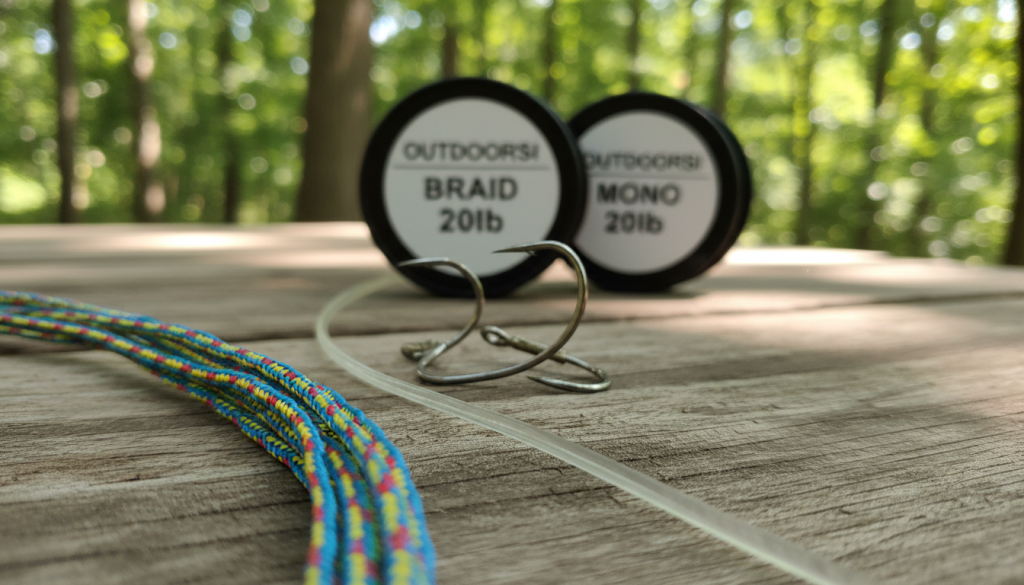
- Diameter fact: a 20lb braid can sit closer to a 6lb mono diameter, which affects spool capacity and range.
- Longevity: monofilament can weaken from UV over time; quality braid resists that breakdown.
- Pros at a glance: choose braid for sensitivity and distance; keep mono for shock absorption and simpler handling.
Casting Distance and Line Diameter
A slimmer fishing line slices air more efficiently, and that boosts your reach. Small drops in diameter change how far your lure flies and how smooth your casts feel.
The Impact of Line Diameter
Thin diameter equals longer casts. In tests, a finer braided option gave about a 30% casting distance advantage with a 3/16oz lure and a 7% gain with a 1/2oz weight. That matters when you need to hit distant structure.
- Air slicing: The thin diameter cuts wind resistance, adding real metres to your casting distance.
- Spool capacity: Smaller diameter lets you pack more line on the spool, so you won’t get spooled on a long run.
- Spinning reels: Reduced diameter helps prevent coiling and keeps your casts consistent on spinning gear.
- Memory: High-quality braided lines resist memory, so your cast quality stays steady over months.
- Practical tip: Every extra metre covers more water and raises your chances of a hookup on Aussie fisheries.
Choose thinner lines on your primary spinning setups if maximum distance is a priority.
Sensitivity and Stretch Characteristics
Feeling every nibble and knowing when to strike starts with the stretch — or lack of it — in your main line.
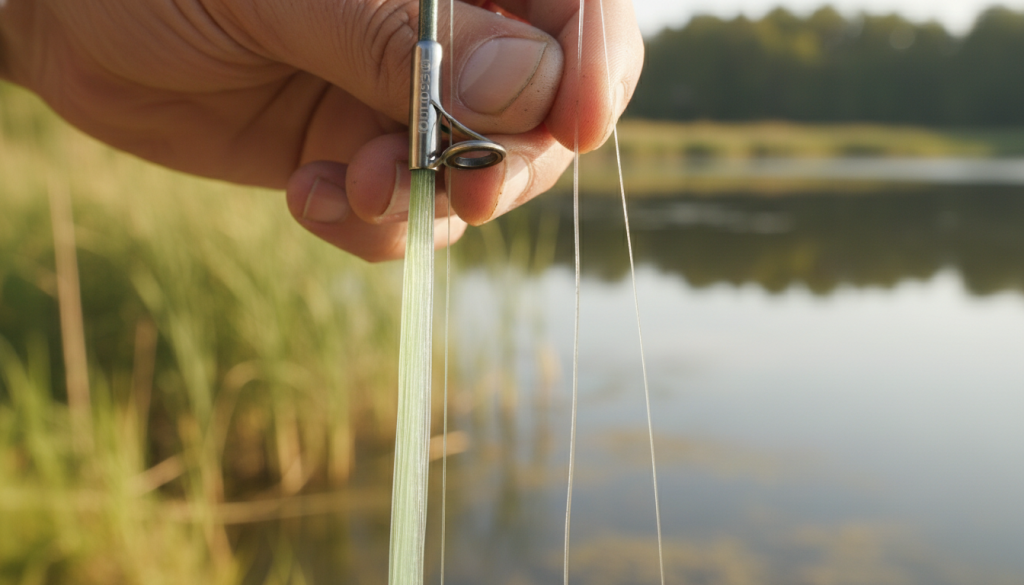
Zero-stretch lines let you detect the faintest taps, even when your bait sits deep near structure. This immediate feedback gives you faster hooksets and better control when fish peel line or run hard.
High-stretch options act like a shock absorber. When you hook an aggressive fish, the stretch softens sudden loads and reduces pulled hooks. That makes mono a go-to for live baits and nervous fish.
| Characteristic | Zero-stretch (braid) | High-stretch (mono) | Fluorocarbon leader |
|---|---|---|---|
| Sensitivity | Excellent — instant feedback | Moderate — dampened feel | High — near-invisible, good transfer |
| Shock absorption | Poor — direct shock to gear | Good — protects hookset | Moderate — adds abrasion resistance |
| Best use | Lure fishing, tight structure | Live baits, big runs | Leader for clear water and bites |
Many Australian anglers tie a fluoro leader to a braid main line. That blends the sensitivity of the main line with the invisibility and stiffness of fluorocarbon. Match your choice to the species and the water you fish to improve hookups and land more fish.
Abrasion Resistance and Durability
How a line holds up when it rubs on timber or rock often decides whether you land the fish or lose it. In heavy cover, abrasion is the main threat to your rig.
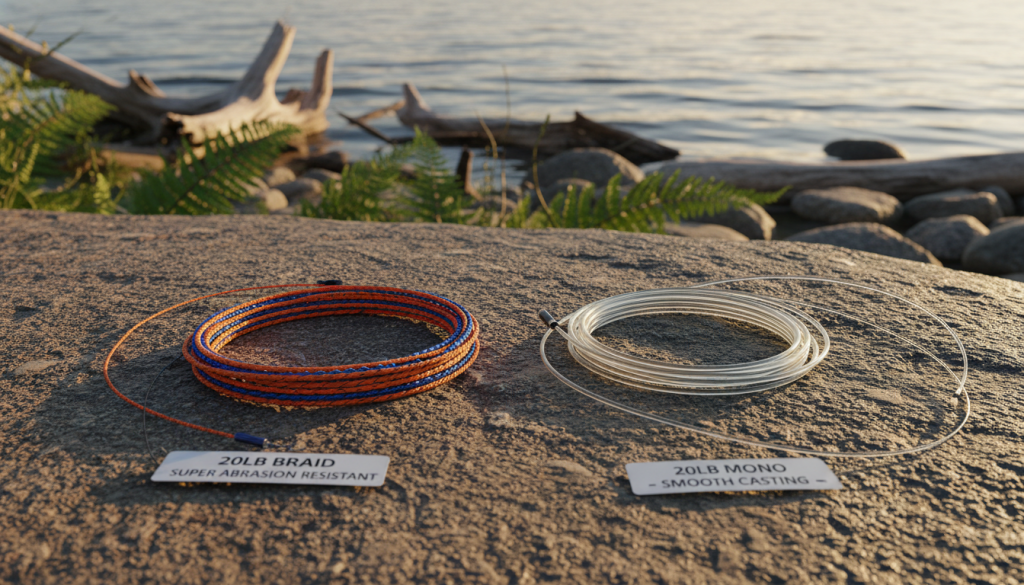
Monofilament is generally more resistant to abrasion because it is a single, solid strand that resists fraying. It soaks shock and helps protect your hook and bait when fish run into structure.
Braid can fray if it rubs on sharp edges, which may cause a sudden break. Still, its higher strength often lets you muscle a fish out of cover before it can snag you.
- Consider price: replacing damaged braided line can cost more than swapping a spool of mono.
- If you target bass in heavy cover, stepping up to a heavier test braid adds durability.
- Always inspect lines after a day around rough structure — look for frays, nicks and abrasion spots.
| Feature | Monofilament | Braided line |
|---|---|---|
| Abrasion resistance | Good — resists fraying | Variable — can fray on sharp edges |
| Shock absorption | High — protects hooksets | Low — direct load transfer |
| Cost to replace | Lower — cheaper spools | Higher — premium fibre price |
| Best use in cover | Snaggy banks, timber | Thick cover with heavier test |
Managing Line Memory and Spooling
Memory and spool setup affect how your casts fly and how often you tangle. Memory is simply the tendency of a line to hold coils from the spool. That affects casting distance and the smoothness of your casts.
Reel compatibility
Different reels handle thin diameter lines in different ways. Some spinning reels need backing to stop slippage. Check your reel manual and match the spool capacity to your planned range.
- No memory: braid has virtually no memory, which helps your casting distance.
- Mono caution: monofilament can pick up coils and twist, especially on small spinning reels.
- Backing tip: many anglers use a mono backing on the spool so the braid grips securely.
- Gear care: always spool with steady tension and inspect guides; older inserts may wear thin lines.
| Issue | Effect | Fix |
|---|---|---|
| Line memory | Shorter casts, tangles | Replace old mono or spool braid correctly |
| Spool slippage | Cast inconsistency | Use mono backing or tape base |
| Guide wear | Abrasion risk | Fit quality guides rated for braid |
When to Choose Monofilament for Your Rig
For many trips, a forgiving main line saves gear and nerves when fish hit hard. Monofilament shines when you need stretch, buoyancy and easy knotting. It’s a practical choice for several common scenarios on Australian water.
Benefits of Stretch
Mono’s stretch acts like a built-in shock absorber. That softness helps protect hooks, especially when fish make sudden runs.
If you’re learning, the extra give reduces pulled hooks and lets you set the drag more aggressively without losing fish.
Topwater baits also benefit because mono’s buoyancy keeps lures on the surface where action happens.
Budget Considerations
Price is a real factor. Mono is cheaper, so you can afford to respool often and swap lines for different jobs.
- Cover and abrasion: mono resists fraying on snags, which helps land bass and structure fish.
- Leader pairing: use a fluorocarbon leader to add invisibility while keeping mono’s forgiving stretch.
- Ease of use: mono ties reliably and suits spinning reels and everyday fishing tasks.
| Reason | When to pick mono | Practical tip |
|---|---|---|
| Stretch | Beginners, live bait, heavy runs | Set drag slightly tighter than usual |
| Price | Frequent respooling, budget anglers | Buy quality mono to reduce UV wear |
| Cover | Snaggy banks, timber, bass habitats | Check line after each cast around structure |
Why Braid Dominates in Saltwater Environments
Saltwater demands gear that lasts under sun, surf and heavy runs. For most anglers, braid delivers the mix of strength and feel you need offshore.
Thin diameter adds real casting distance, letting you reach schools and structure from shore or boat. Because braid does not soak up water, it keeps strength and performance all day.
- Long casts: thin lines travel farther to reach schooling fish.
- No water absorption: consistent strength and no swelling like mono.
- High spool capacity: prevents you from being spooled on long runs.
- Sensitivity: you feel subtle bites even with deep sinkers and heavy bait.
- UV resistance: stands up to harsh Australian sun.
| Feature | Benefit in saltwater | Why it helps you |
|---|---|---|
| Diameter | Smaller | More distance and spool capacity for long runs |
| Water absorption | Minimal | Stable strength and handling all day |
| Sensitivity | High | Better hookup rates on subtle bites |
| Durability | Good vs UV and wear | Less frequent respooling under sun and salt |
For modern saltwater setups, braid is the standard because it gives strength, sensitivity and casting performance in one package. Pair it with a suitable leader and you’ll handle big runs and smart fish with more confidence.
Essential Tips for Beginners
Begin with simple choices so you learn fast and enjoy more time catching fish. Start by using monofilament — it is forgiving, easy to knot and helps when your drag needs to absorb sudden runs.
When you try braid, remember it has a thin diameter. Use a fluorocarbon leader to keep presentations invisible and protect against abrasion near cover.
- Practice basic knots until they are quick and reliable.
- Choose a spinning reel that suits low-stretch lines before you switch fully to braid.
- Rinse reels and lines with fresh water after salt trips to prevent salt buildup.
| Choice | Ease | Best use |
|---|---|---|
| Monofilament | High | Beginners, baits, shock absorption |
| Braid | Moderate | Long casts, sensitivity, thin diameter |
| Fluorocarbon leader | Moderate | Invisibility, abrasion resistance |
Talk to local tackle shops — their advice will match species and range near you. Small steps with the right gear make a big difference for new anglers.
Conclusion
A smart line choice puts more fish in the boat and less time guessing tactics. For most anglers, matching lines to species and water pays off. Pick the thread that fits your style and local conditions.
Use a thin, sensitive main with a fluorocarbon leader when you need distance and feel. That setup improves your casts and gives better hookup rates for wary fish.
Keep monofilament on hand when you want the forgiveness of stretch around heavy cover. Consider diameter and reel compatibility before you spool up so your gear performs all day.
Make the choice that gives you confidence on the water, and you’ll land more quality catches.