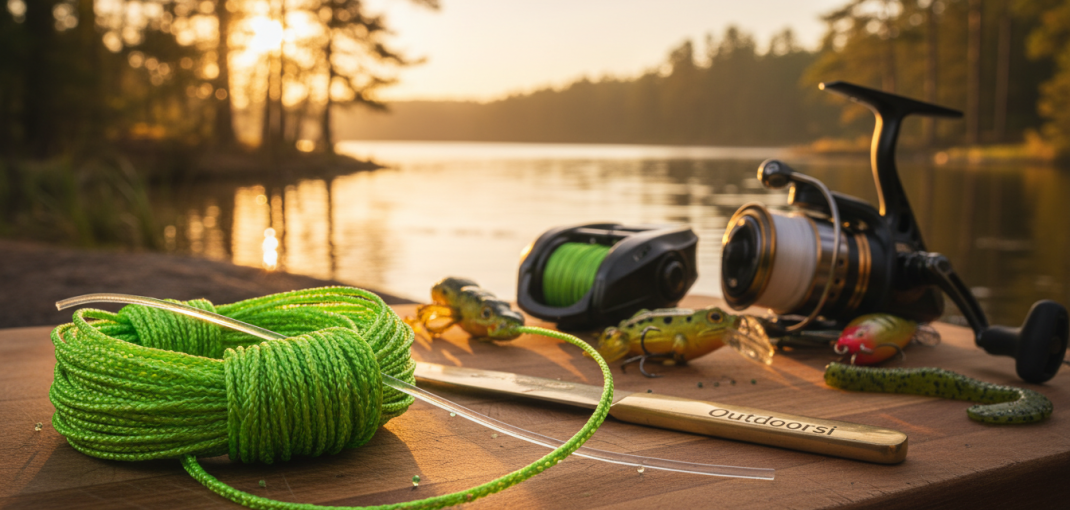
If you’re planning your next trip in Australian waters, choosing the right cord can change your day on the water. Pick poorly and you risk tangles, weak casts or lost fish. Pick wisely and you’ll notice better casting distance, sensitivity and fewer headaches.
This short guide gives you a practical, no-fluff rundown. You’ll learn how each type performs for saltwater and freshwater, how stretch affects hook setting, and which options suit beginners or experienced anglers.
Key features to watch: strength-to-diameter, abrasion resistance, memory, knot reliability and reel compatibility. Brands like Daiwa Saltiga 12 or J-Braid are popular among local fishers when strength and distance matter.
By the end of this piece you’ll have clear, practical steps to match your gear to where you fish and the species you target. That means more time casting and more time landing fish.
Key Takeaways
- Match your cord to the species and water type for best results.
- High-strength braided options suit long casts and sensitivity.
- Mono remains easy to handle and forgiving for beginners.
- Watch stretch, memory and knot strength when rigging your reel.
- Consider reel compatibility and abrasion resistance for saltwater use.
Understanding the Basics of Fishing Line
Picking the correct line affects your casts, hook sets and how confident you feel at the reel.
Start with purpose: Match your cord to the way you fish. Shore casting, light tackle estuary work and kayak trips each need different strength, diameter and abrasion resistance.
Mono (monofilament) is the common, affordable choice for many Australian anglers. It stretches to absorb sudden strikes, which helps stop snap-offs. That stretch also makes hook sets more forgiving for beginners.
- Visibility & memory: Mono can be more visible but has low memory compared with some specialty cords.
- Diameter & strength: Thinner cords give more spool capacity and sensitivity; thicker cords add abrasion resistance.
- Reel compatibility: Check spool capacity and braking when you upgrade to braid or fluorocarbon options.
| Feature | Mono | Braid | Fluorocarbon |
|---|---|---|---|
| Stretch | High | Low | Low–Medium |
| Visibility in water | Higher | Low | Low |
| Abrasion resistance | Moderate | High | High |
| Price | Low | Medium–High | Medium |
For most beginners, a reliable monofilament fishing line gives the best balance of price and ease of use. Replace it regularly—UV and time degrade strength—and you’ll get better results on the water.
Braided vs Monofilament Fishing Line Comparison
Sensitivity or stretch — pick what matters most to your fishing style.
Choose braid when you want zero stretch and instant feel. That sensitivity helps you detect subtle bites and improves lure control in deep water.
Use mono when you need forgiveness. Its natural stretch soaks up sudden runs and protects lighter knots and trebles on lures.
Advantages of Braid
- Strength-to-diameter: More line on your spool for longer casts and better depth control.
- No memory: Less coiling and fewer wind knots when you cast.
- Sensitivity: Feel every micro-movement from your bait or lure.
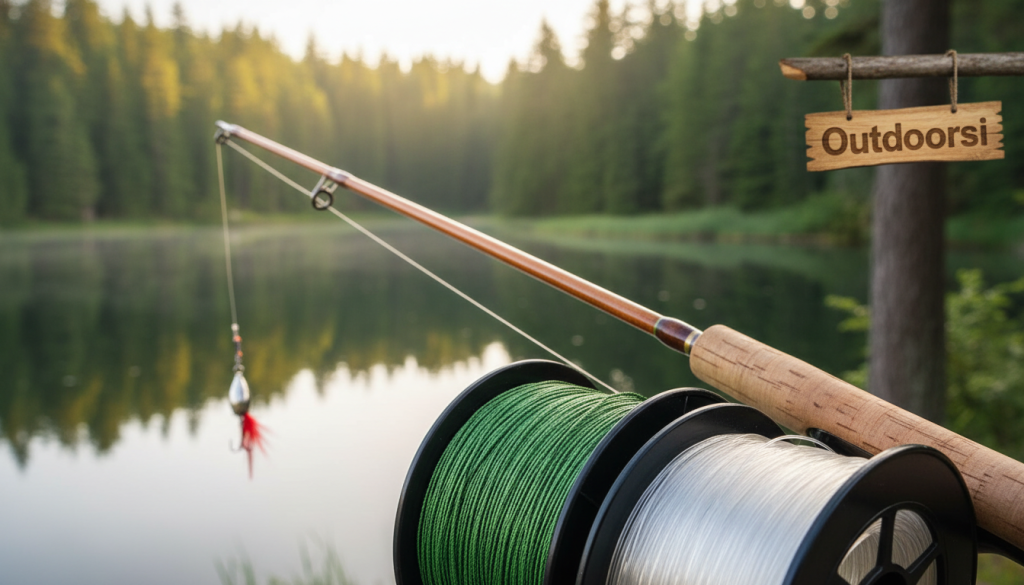
The Versatility of Monofilament
- Shock absorption: Stretch reduces snap-offs and is kinder to hooks and fish during the fight.
- Easy handling: Cheaper, forgiving for beginners and works well as a leader-free setup.
- Leader pairing: When you use braid, attach a mono or fluorocarbon leader with an FG or Albright knot for abrasion resistance and stealth in clear water.
| Feature | Braid | Mono |
|---|---|---|
| Stretch | Zero | High |
| Sensitivity | Very high | Moderate |
| Abrasion resistance | Low (use leader) | Moderate |
Bottom line: braid gives you sensitivity and spool capacity. Mono gives you versatility and shock absorption. Match the choice to your rod, reels and local waters for the best results.
Performance Factors for Australian Conditions
Local conditions—salt, sand and snags—drive the best choices for your spool and leader. Think about where you fish and what lives there before you pick your cord.
Managing Abrasion and Visibility
Abrasion resistance is vital around rock, reef and wrecks. Thin main cords give you more spool capacity and sensitivity but need protection near structure.
Use a quality leader to shield your main. Mono or fluorocarbon leaders add abrasion resistance and stealth in clear water. Fluorocarbon is less visible and resists abrasion better around sharp coral.
- Match strength to your rod and reel so fights with big fish don’t overload your gear.
- Mind diameter: thinner cords cast further but suffer more from wind and current.
- Check knots often—knots are the weakest point with thin cords and poor knots cost you fish.
| Condition | Recommended Main | Recommended Leader |
|---|---|---|
| Rocky shore / reef | thin braid for sensitivity | mono or fluorocarbon, heavy |
| Clear estuary | mono or thin braid | fluorocarbon, low visibility |
| Freshwater snaggy rivers | strong mono | mono, shock-absorbing |
For beginners, start with a forgiving mono main and a short fluorocarbon leader for abrasion protection. Regularly inspect your cords for wear—replace them when you see fraying or damage to save time and avoid lost fish.
The Role of Line Diameter and Weight
How you match diameter to strength shapes every cast, fight and leader choice on the water.
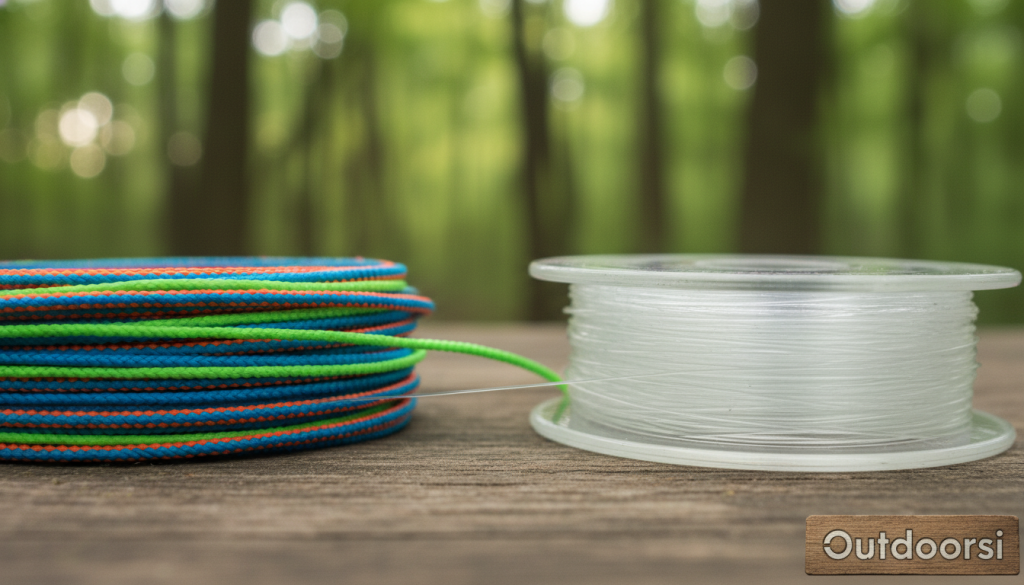
Understanding PE Ratings
PE ratings give a consistent measure for braided products, with common sizes from 0.4 (0.100mm) to 14 (0.620mm).
A thinner diameter casts farther and fits more on your spool. The trade‑off is lower abrasion resistance and less bulk for knots.
Breaking Strain Explained
Breaking strain tells you the real strength for the task. Match it to the species you target—light estuary work needs much less than offshore game.
Use a stronger leader at the hook. A short mono or fluorocarbon leader protects against abrasion while keeping casting performance high.
Matching Line to Reel Capacity
Always pair weight with reel and rod capacity to avoid gear failure. When you spool, keep steady tension so the material won’t dig in during a fight.
- Tip: thin braid gives extra capacity for long runs, but add a heavier leader near structure.
- Beginner advice: start with a forgiving mono main and a short fluorocarbon leader for abrasion resistance.
| Use | Diameter (PE/mm) | Recommendation |
|---|---|---|
| Light estuary | 0.4–1.0 / 0.10–0.20mm | Mono main or thin braid + fluorocarbon leader |
| Offshore game | 2–6 / 0.20–0.40mm | Thin braid for capacity, heavy leader for abrasion |
| Snaggy shore | 1.5–4 / 0.15–0.35mm | Stronger diameter and tougher leader |
Choosing Your Setup for Specific Fishing Styles
How you fish — from estuary stalking to reef bashing — should dictate your rig.
Bottom work: Use a braid main for sensitivity and spool capacity, then add a short fluorocarbon leader for invisibility and abrasion resistance. This combo gives you feel on the drop while hiding the leader near the sinker and hooks.
Topwater and lures: A low-stretch main helps you set hooks fast. Keep diameter matched to your reel to avoid wind knots and to cast cleanly.
Structure and snags: Fit a mono leader for extra shock and abrasion resistance around rock or reef. The extra memory and give can save fragile knots and hooks during sudden runs.
- Beginners: a straight mono setup is cheap and forgiving.
- Clear water: pair a sensitive main with a stealthy leader.
- Always check reel capacity and knot strength before you leave the ramp.
| Style | Main | Leader |
|---|---|---|
| Bottom/Deep | braid | fluorocarbon |
| Topwater/Lures | low-stretch braid | short mono |
| Rocky Shore | strong mono | heavy mono |
Conclusion
What you spool up with matters—match it to the species, the spot and how you like to fish. Choose braid for sensitivity and spool capacity, or pick mono for forgiveness and easier handling. Balance price and performance so your setup fits the day and the reel you use.
Always add a quality leader to protect your main and gain abrasion resistance near structure. Learn a few solid knots and spend a little time on reel maintenance to stop avoidable breakages and save time on the water.
By weighing the trade‑offs in stretch, strength and price, you’ll build a fishing line setup that boosts confidence and helps you land more fish each trip.