If you’re rigging for Aussie coastal trips, a 30lb braid often sits between light and heavy setups. Anglers picked this line for species like tailor, salmon and bonito because it blends strength and casting ease.
Danno asked for advice back in 2010 about using Sunline Super PE on an 11ft 6–15kg rod paired to an 8000 Sphero reel. That combo works for long runs, but you must match spool capacity to the target.
Make sure your reel holds at least 300m, since local favourites will strip 200–300 yards on a feed. Choose gear that balances spool space, rod action and drag for steady play.
This short guide gives practical, local tips so your next session spends more time hooked up and less time fixing tangles.
Key Takeaways
- 30lb braid suits coastal species such as tailor, salmon and bonito.
- Pair line choice to reel spool capacity — aim for about 300m.
- Match rod action and reel drag to reduce lost runs of 200–300 yards.
- Choose gear for balance: casting performance matters as much as strength.
- Consider target species before spooling to improve success on the water.
Understanding the Versatility of 30lb Braid
A 30lb braided line gives anglers a versatile balance of sensitivity and bite-resistance for many coastal sessions. It suits both light presentations and heavier shore work, so you’ll find it useful across several scenarios.
Performance Characteristics
Braided material has virtually zero stretch, which dramatically improves bite detection. That means you’ll feel even the faintest taps from a wary trout or a cautious coastal species.
Modern reels handle thin-diameter braid well, helping you spool more line and maintain control over terminal tackle.
Strength Profiles
Choosing the right braid is about matching tensile strength to your targets and local conditions. A 30lb option offers a strong, low-diameter profile that resists abrasion and handles long runs.
- Understanding performance of your line is one of the most important things when upgrading gear.
- Unlike mono, braid gives superior sensitivity so you detect subtle takes while fishing.
- Minimal stretch lets you set hooks confidently at distance from the boat.
- Durability ensures the braid copes with harsh Australian coastlines and snags.
- Selecting the right braid is fundamental to consistent success on the water.
What Fish Can You Catch With 30lb Braid
A mid-strength line is handy when your session mixes casts, bait work and boat drifting. Danno targeted tailor, salmon and bonito historically, and that setup still suits those quick, hard strikes.
Expect the occasional mulloway in estuaries and small sharks on rougher days. On reefs you might meet red emperor — they fight hard right to the boat, so drag and leader choices matter.
Why this way works: braid gives sensitivity and low diameter so you spool more line and detect takes quicker. Using the right bait will decide which species respond to your presentation.
- Versatile thing for mixed trips — suits tailor through to larger predators.
- Best when you spend a lot of time fishing from a boat and need ready strength.
- Good setup lets you manage big runs without losing casting performance.
- Even slow bite periods are easier when line choice and bait match the target.
| Target | Typical Approach | Why 30lb Works |
|---|---|---|
| Tailor / Salmon / Bonito | Light lures, fast retrieves | Sensitivity and casting distance |
| Mulloway | Live bait, estuary drops | Extra muscle for long runs |
| Red Emperor | Reef baits, heavier leaders | Abrasion resistance near structure |
| Small Sharks / Predators | Chunk bait, strong hooks | Control without huge rod upgrade |
Comparing Braid Against Mono and Fluorocarbon
Your setup will behave very differently depending on whether you spool mono, fluorocarbon or braid.
Material Differences
Mono is often cheaper and easier to knot, so many anglers keep spools handy for quick changes. It stretches under load, which can soften sudden runs and help stop hook pulls on light tackle.
Braid is much thinner for the same strength, so it increases line capacity on smaller reels and improves sensitivity. Its near-zero stretch helps you detect subtle taps during slow periods.
Fluorocarbon sits between those two. It is less visible underwater and offers better abrasion resistance than braid near structure, which makes it a popular leader choice for many Australian anglers.
Quick Comparison
- Mono: knot-friendly, elastic, budget smart.
- Braid: thin, sensitive, excellent spool capacity on small reels.
- Fluorocarbon: low visibility, good abrasion resistance as leader material.
| Attribute | Mono | Braid | Fluorocarbon |
|---|---|---|---|
| Knotting | Very good | Requires finishing knots | Good |
| Stretch | High | Low | Low–moderate |
| Best use | General purpose, leaders | Long casts, deep fishing | Leader near structure |
The Role of Abrasion Resistance in Australian Waters
When you fish near reef and rock shelves, abrasion resistance often decides whether a fight ends in the boat or at the coral.
Abrasion is one of the most critical things to consider when you are fishing in Australian water, especially over hard coral and jagged structure.
While braid gives great strength and sensitivity, it still nicked or cut by sharp edges. That is why many anglers add a heavy leader to protect the main line.
- High abrasion resistance helps you pull a hooked prize off the reef before the connection fails.
- When a fish dives into coral, your line’s durability faces its toughest test in saltwater.
- Balanced choices—strong main line plus a tough leader—reduce the chance of losing fish in structure.
| Scenario | Recommended Setup | Why it helps |
|---|---|---|
| Reef drops | Thin main line + heavy fluorocarbon leader | Leader resists abrasion near rock and coral |
| Rocky shore casts | Stronger main line, abrasion-resistant leader | More control when a hooked target runs into structure |
| Open-water drifts | Light main line, standard leader | Casting distance preserved, still ready for reef edges |
Optimising Casting Distance and Line Diameter
When distance matters, small changes to line diameter and spool size make a big difference to your casts.
Friction Reduction
Reducing friction at the spool lip helps your casts travel further. A thinner line slides off more cleanly, so you get smoother releases and greater casting distance.
Tip: many anglers use a lighter braid on a bigger reel to flash more range when fishing flats and shallow banks.
Spool Diameter
A larger diameter spool lowers the angle at which line leaves the reel and cuts drag. Combine that with light braid and you reduce wind resistance and friction, improving casting distance.
Using 15lb braid on a 4000-size reel is a common strategy for launching baits out onto open flats. That setup fits more line and keeps casts long without swapping to heavier tackle.
- Optimising casting distance helps you reach fish in distant pockets and flats.
- A larger spool diameter reduces friction and boosts casting performance.
- Smaller diameter line fits more on the spool, useful when using live baits or long drifts.
- Match line diameter to reel size and your casting distance will improve.
| Setup | Best use | Why it helps |
|---|---|---|
| 15lb braid + 4000 reel | Open flats, long casts | More line, low friction for extra range |
| Thin mono + large spool | Long-range baits | Smooth release, easy spool capacity |
| Heavier line + small spool | Structure work | Control over short distance fights |
Reel Compatibility and Spool Capacity
Not all reels handle heavy line types the same. Choose a reel that matches the demands of structure work and long runs.
Practical pairings: a 3500-size spinning reel often suits 30–50lb braid for heavy structure jobs. A 5500-size is better for bigger inshore targets that make long, powerful runs.
Ensuring your reel accepts the right line thickness and capacity prevents tangles and preserves casting performance. Modern reels are built to cope with high-strength braid without harming the spool, but always verify maker specs before overfilling.
- Check spool capacity so you have enough line to survive long runs from a large fish.
- Match spool diameter to your casting needs; more capacity helps when drifting or trolling.
- Confirm the spool lip design suits thin line to reduce wind knots and overruns.
| Reel Size | Common Line Range | Best Use |
|---|---|---|
| 3500 | 30–50lb | Heavy structure, coastal reef work |
| 4500 | 20–40lb | General inshore, mixed fishing trips |
| 5500 | 40–80lb | Giant inshore targets, long-run species |
Managing Line Memory and Knot Strength
Line memory and knot quality often decide whether a long session ends in success or a lost prize. Pay attention to how your spool sits and how you finish each connection. Small habits save frustration on the water.
Mono is often easier to knot under pressure, so many anglers keep a mono leader or shock tippet for quick re-rigs. Mono can also retain coils that reduce casting accuracy, so manage memory when spooling.
Knot Integrity
Knots are the single most critical point of strength in any setup. Take your time to dress and tighten each knot properly. Rushing leads to slippage and lost fish.
- Managing line memory improves cast control and reduces tangles.
- Knot integrity determines actual system strength more than advertised test figures.
- Because braid has no stretch, its knots must be flawless to handle shock loads.
- Use knots matched to the material: some knots suit mono better, others work with braid.
Saltwater Versus Freshwater Applications
Your choice of line should reflect whether you are casting over reefs or winding through a clear stream.
Saltwater demands tougher setups. Heavier main line and abrasion-resistant leaders resist coral, kelp and large predators. Rinse gear in fresh water after each trip to stop salt buildup from weakening reels and line.
Freshwater—for trout and similar targets—lets you use lighter tackle. Clear water and soft banks mean subtle presentations and thinner line help your baits look natural.

- Saltwater: choose strong, abrasion-resistant main line and a tough leader.
- Freshwater: lighter line suits clear streams and timid trout.
- Always match your bait to the environment and adjust line strength for local hazards.
- Rinse and maintain gear after salt trips to prolong reel and line life.
| Environment | Recommended Main Line | Reason |
|---|---|---|
| Ocean / Reef | Heavier, abrasion-resistant | Handles predators and rough structure |
| Rivers / Lakes | Lighter, low-visibility | Better presentation for trout and skittish species |
| General Inshore | Mid-strength braid + leader | Balance of sensitivity and toughness |
Selecting the Right Leader Material
Leader choice often decides how many trips end in the boat. Pick a material that hides your main line and protects it from reef and rock.
Visibility matters: a long leader keeps the visible main line away from wary targets. Use a longer section when waters are clear so the main line is less likely to spook wary quarry.
Mono is practical: it is cost-effective and offers decent abrasion resistance around coral. Many anglers use mono as a buffer between thin braid and sharp structure.
- Selecting the right leader material is crucial when high-visibility main line is in use.
- A mono leader gives abrasion resistance to protect your main line from cuts.
- Long leaders reduce line visibility in clear water and improve hookup rates.
- Ensure your leader-to-main-line connection is smooth and strong to avoid hang-ups during casts.
| Leader Type | Strengths | Best Use |
|---|---|---|
| Mono | Good abrasion resistance, cost-effective | Reef work, long leaders over coral |
| Fluorocarbon | Low visibility, abrasion resistant | Clear water, shorter leaders near structure |
| Wire/Heavy | Cut resistance vs teeth | Large predators, rough-bottom drifts |
Handling Large Predators and Sharks
When big predators lurk near structure, your line choice becomes the difference between a photo and a lost battle.
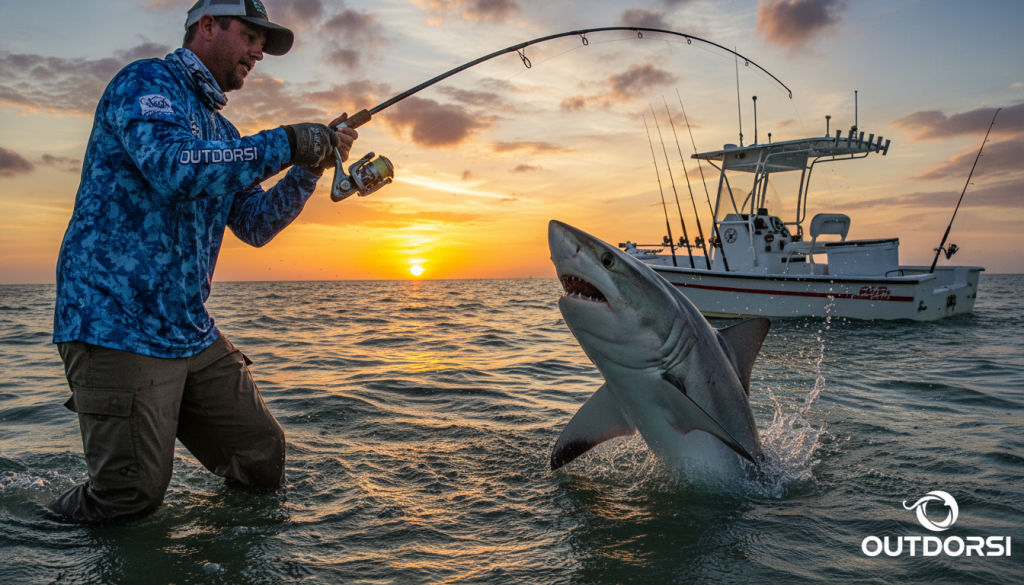
Sharks and hard‑fighting predators were a common challenge in Australian waters and often busted anglers using 30lb setups. Even robust species like bludger trevally will snap under pressure if they reach reef cover.
Upgrading your main line gives you better control when a run heads for sharp rock or kelp near the boat. Choosing higher test line or moving to a heavier braid increases your margin and reduces cut-offs.
- Strength matters: big predators deliver sudden power that tests knots, drag and main line.
- Fish in known shark areas? Increase your line rating and check leader choices before you drop baits.
- If you repeatedly lose quality catches to predators, it is a clear sign to step up your setup.
| Situation | Recommended change | Why it helps |
|---|---|---|
| Shark‑prone reef | Heavier main line + heavy leader | More cut and abrasion resistance near structure |
| Bludger trevally frequent | Stronger braid or higher test mono | Stops fast sprints into reef gaps |
| Mixed inshore trips | Balance strength and casting—upgrade if losses rise | Keeps versatility while protecting against surprise predators |
Essential Gear for Beginners
Starting out, simple, well-matched tackle helps you learn casting and landing without needless frustration.
Rod Selection
Choose a rod that balances sensitivity and backbone. A medium-action rod gives feedback on bites while still fighting larger targets.
Tip: look for a length around 7–8ft for general inshore use. That length aids casting and gives enough leverage in a fight.
Reel Sizing
A 2500-size reel is a great starting point for inshore trips. It is light, easy to handle and offers enough line capacity for most beginner scenarios.
Match the reel to the rod so line lays smoothly and casting becomes easier. Proper sizing reduces tangles and helps you learn faster.
- Start by matching rod action to target species and line strength for a balanced setup.
- A 2500-size reel helps you practise casting without heavy gear getting in the way.
- Invest in quality gear early to save time and money as skills improve.
| Item | Suggested Size | Why it works |
|---|---|---|
| Rod | Medium action, 7–8ft | Sensitivity for bites, backbone for fights |
| Reel | 2500 | Balanced weight and line capacity for inshore work |
| Line | Light to mid test | Easy casting and good feel at the tip |
Avoiding Common Line Failure Points
Most line breakages start at weak knots, nicked sections or run‑ins with hidden reef—spotting them early saves time and grief.
Knot failure was often the leading cause of lost fish because anglers rushed ties. Take the time to dress and test each knot before you cast.
Always inspect for frays after fishing near coral or rock. A small nick in your main line will grow under load and usually fails at the worst moment.
Mono is more forgiving at knots, so many Aussie anglers use it as a leader or shock tippet when working tough structure. Braid gives sensitivity but needs careful finishing knots.
- Avoiding common line failure points is the best way to stop losing a trophy at the side of the boat.
- Inspect your line after every trip, especially after abrasive contact in shallow water.
- Re‑tie knots at the first sign of wear—weak connections are the most common thing to fail.
- Be proactive with line care and you will prevent avoidable heartbreak on the water.
| Issue | Quick fix | Why it helps |
|---|---|---|
| Frayed main line | Cut back and re‑splice | Removes hidden weak points |
| Worn knots | Re‑tie with proper finish | Restores full strength |
| Abrasive structure | Add mono leader | Protects thin main line near reef |
Balancing Drag Settings for Lighter Reels
Setting drag for a light outfit changes how long a run turns into a landed prize. You should avoid locking the drag down on a small reel because excess pressure damages gears and bearings.
Match your drag to the line test and the reel’s capacity. A light fishing setup needs give so a strong swimmer can peel yards without wrecking the spool. If a hooked fish makes 200–300 yards, a small reel with heavy line will still lose the fight if the drag is too tight.
- Balancing drag protects internal parts and keeps the system reliable on long runs.
- When you use a light setup, let the fish take some line instead of stopping it hard.
- Know your reel limits; if you need more braking power, upgrade to a bigger model.
- Always test the drag before casting so the setting suits your line and situation.
| Issue | Action | Why |
|---|---|---|
| Excess drag | Loosen 10–20% | Prevents gear damage and snapped line |
| Long runs (200–300 yards) | Use larger reels or allow more free spool | Maintain control without overheating the reel |
| Frequent losses | Upgrade reel or change setup | Higher capacity reels handle heavier tests and sustained runs |
When to Upgrade to Heavier Tackle
When your outings end with snapped leaders or repeated break‑offs, it’s time to rethink your tackle. Upgrading your line and overall setup gives you more control and less guessing during long runs.
If you are regularly getting busted off by large fish, a stronger main line or heavier mono leader is the clearest sign to move up. A heavier setup helps you steer powerful runners away from reef and kelp, especially when you are fishing from a boat.
- Know when to upgrade: repeated failures mean your current gear isn’t right for local conditions.
- Sometimes a small bit more strength is all that changes the outcome of a fight in your favour.
- Don’t be afraid to move up to heavier mono or change to a stronger braid when targeting powerful species.
- Check reels and rod ratings so the whole system works together — a stronger line needs matched gear.
| Situation | Recommended change | Why it helps |
|---|---|---|
| Frequent break‑offs at reef | Heavier main line + longer mono leader | Pulls fish clear of structure with less cut risk |
| Big, power runs from boat | Stronger braid and higher capacity reels | Makes handling long runs easier and protects knots |
| Occasional toothy predators | Heavy mono or wire leader | Prevents bite‑through from sharp teeth |
Practical Tips for Spooling Your Reel
A neat, evenly packed spool is the unsung hero of smooth casts and trouble‑free sessions. Spend a little extra time spooling and you’ll avoid twists, wind knots and awkward tangles when casting from shore or a boat.
Choose the right main line for the job before you start. Thinner line sits flatter and gives more capacity, while thicker line helps when structure and abrasion are a concern.
Use a damp cloth to apply steady tension as you fill the spool. Keep the pressure consistent so the braid layers tightly and evenly across the entire reel face.
- Pack tight: consistent tension prevents loose coils that ruin casting.
- Check level: stop before the rim so the spool doesn’t overfill and create backlash.
- Inspect often: after casting, recheck the spool level to maintain casting distance.
| Step | Action | Why it helps |
|---|---|---|
| Set tension | Use damp cloth | Packs line tightly to reduce twists |
| Choose line | Match to target | Balances casting and abrasion resistance |
| Final check | Leave 2–3mm from lip | Prevents overfill and improves casting |
Do this properly and your reel performs better. Well‑spooled reels let you focus on the moment a solid take peels line, not on fixing knots. Small things like tension and line choice make a big difference to long casts and landing a good catch.
Conclusion
To finish, a sensible line choice and a matched setup are the simplest ways to upgrade your success on the water.
Thirty-pound braid often offers a solid balance for many coastal trips—sensitive enough for light takes and tough enough near structure. Pick line that suits the species and conditions you target.
Check spool capacity and the fit to your reel before you head out. A well‑matched spool saves time and keeps fights fair.
Tie neat knots and keep your gear clean; this advice prevents avoidable breakages and lost runs.
Spend a bit of time on casting and drag practice and you will notice better results. Good luck and enjoy landing more fish.