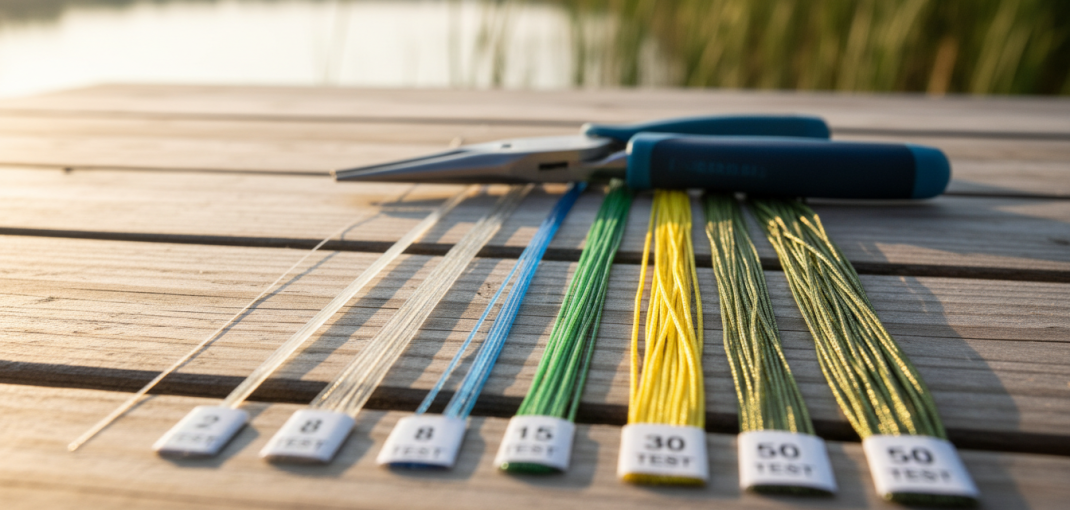
Choosing the right line can make or break your day on the water. If you pick the wrong breaking strain or diameter, you might lose casts, tangle your spool, or miss that trophy fish.
Modern braid is built from UHMWPE fibres, giving excellent sensitivity and low stretch, while early monofilament relied on poundage as the main measure of breaking strain, as Lawrence Lee notes.
Match the rating to your rod and reel. A finer diameter helps casting distance and bite feel, but heavier weight and higher breaking strain suit bigger species like barra or southern snapper.
Keep quality high. Your line is the link between rod and fish, so choose a spool that fits your reel and the conditions you face across Australia.
Key Takeaways
- Check the breaking strain and match it to your rod and reel capacity.
- Finer diameter improves casting and sensitivity; thicker holds more weight.
- Modern braid (UHMWPE) gives low stretch and high feel for bites.
- Monofilament poundage was once the main guide for breaking strain.
- Always prioritise quality to avoid lost fish and gear failure.
Understanding Fishing Line Strength Ratings and Diameter
Picking the right combination of breaking strain and diameter changes how your gear performs on any Australian waterway.
American makers often list poundage, while many European brands give diameter alongside breaking strength, as Lawrence Lee notes. This matters because your rod will only perform at its best when matched to an appropriate line rating.
Match the spool to the rod and reel to avoid overloading gear during a heavy run. A finer diameter helps casting distance and bite feel, while higher breaking strain suits big local species like kingfish and flathead.
- Australian conditions are varied; saltwater abrasion and snags require different choices than inland lakes.
- A higher number does not always mean the best pick for every situation—consider diameter, not just weight.
- Modern braid gives huge strength for a thin diameter compared to monofilament, changing how you spool reels.
| Line Type | Typical Diameter | Breaking Strain | Best Use |
|---|---|---|---|
| Braid | Thin | High (per mm) | Long casts, heavy cover, saltwater species |
| Monofilament | Medium | Moderate | General freshwater, shock absorption |
| Fluorocarbon | Similar to mono | Moderate to high | Low visibility, abrasion resistance near structure |
Before you spool, always check the manufacturer’s specs for diameter and line rating. Set your drag to suit the breaking strain and the target fish to avoid gear damage and lost catches.
Comparing Monofilament, Braid, and Fluorocarbon
Different materials give distinct benefits on tackle, from casting distance to abrasion defence.
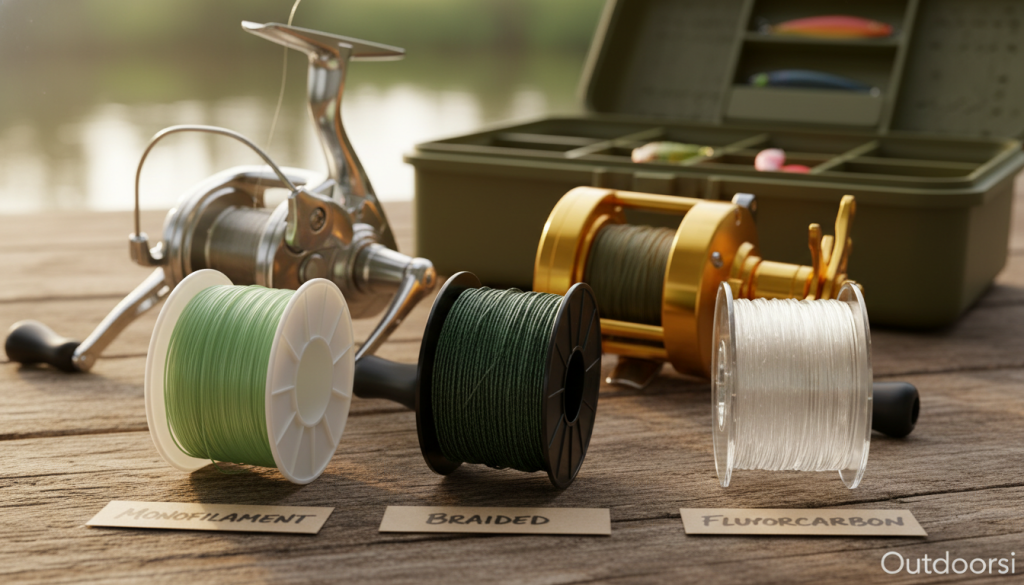
Mono is forgiving. It has more stretch, so it soaks up sudden runs and helps beginners learn to fight fish without panic.
Why anglers choose braid
Braid offers razor sensitivity and thin diameter. Brands like Sunline Siglon and Daiwa J-Braid Grand use Izanas fibres for durability.
Kosta Linardos notes braided fibres (UHMWPE) are stronger than steel and Kevlar per unit. That gives better casting distance and feel for jigging and offshore work.
When to use fluorocarbon
Fluorocarbon hides near structure. Use it as a leader when species are wary in clear water. It resists abrasion and sinks faster than mono.
- Mono: forgiving, good for shock absorption.
- Braid: thin spool capacity, high sensitivity, great for jigging.
- Fluoro: low visibility, excellent abrasion resistance as a leader.
| Material | Key Benefit | Best Use |
|---|---|---|
| Monofilament | Stretch and shock absorption | General freshwater, novice anglers |
| Braid (UHMWPE) | Thin diameter, high sensitivity | Offshore jigging, long casts, heavy cover |
| Fluorocarbon | Low visibility, abrasion resistance | Leader for wary species near structure |
The Reality of PE Ratings and Line Diameter
PE numbers often confuse anglers because they trace back to a silk‑thread measure, not modern braid performance. Lawrence Lee points to that origin, which explains why PE can mislead on real-world breaking values.
Focus on breaking strain and actual diameter. Kosta Linardos urges you to ignore a lone PE number and check the manufacturer’s listed breaking strain and diameter instead.
- Different braid weaves produce varying actual breaking strength even at the same PE tag.
- A thin diameter helps casting, but confirm it suits the target species and your rod.
- In snaggy water, abrasion resistance matters more than a PE figure; use a quality leader to protect the main line.
| PE Rating | Typical Diameter (mm) | Approx Breaking Strain (kg) | Best Use |
|---|---|---|---|
| PE0.6 | 0.08 | 8–10 | Light freshwater, finesse rigs |
| PE1 | 0.12 | 12–15 | General inshore work |
| PE3 | 0.20 | 25–30 | Heavier reef and estuary species |
| PE6 | 0.32 | 50–60 | Big offshore and heavy cover |
Matching Line to Your Rod and Reel Setup
A well-matched rod and spool turns long days casting lures into comfortable, productive sessions. Use gear that works together so you cast farther and fight fish with less effort.
Rod Action and Casting Weight
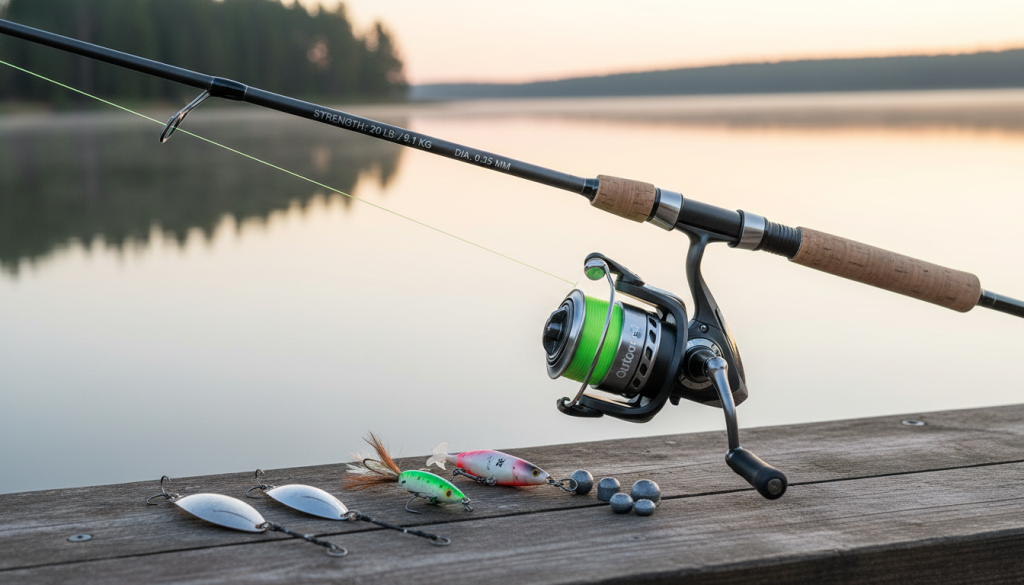
Match the rod action to your lure’s casting weight. A fast action rod needs a line and lure in its recommended range to cast true.
For a 6–12lb rod, Lawrence Lee suggests using around a 9lb line as the midpoint. That gives good casting distance and control for most inshore species.
Balancing Your Reel
Load the spool with enough line for your target species but avoid overfilling. Too much line causes tangles; too little limits your range and safety during long runs.
- Balance reel size with rod power to cut fatigue when casting all day.
- Consider braid for thin diameter and more spool capacity when jigging offshore.
- Use mono or a fluoro leader for abrasion resistance near structure.
| Rod Rating | Suggested Line | Best Use |
|---|---|---|
| 6–12lb | 9lb (midpoint) | Light inshore, lures, estuaries |
| 10–20lb | 12–15lb | Reef work, larger species |
| 20–30lb | 25–30lb | Offshore, heavy cover |
If in doubt, ask local tackle experts to match rods and reels for Australian water and species. Small tweaks give big gains in casting distance and comfort.
Adjusting Drag Settings for Optimal Performance
How you set the drag determines whether a hard run ends in a landed prize or a snapped spool.
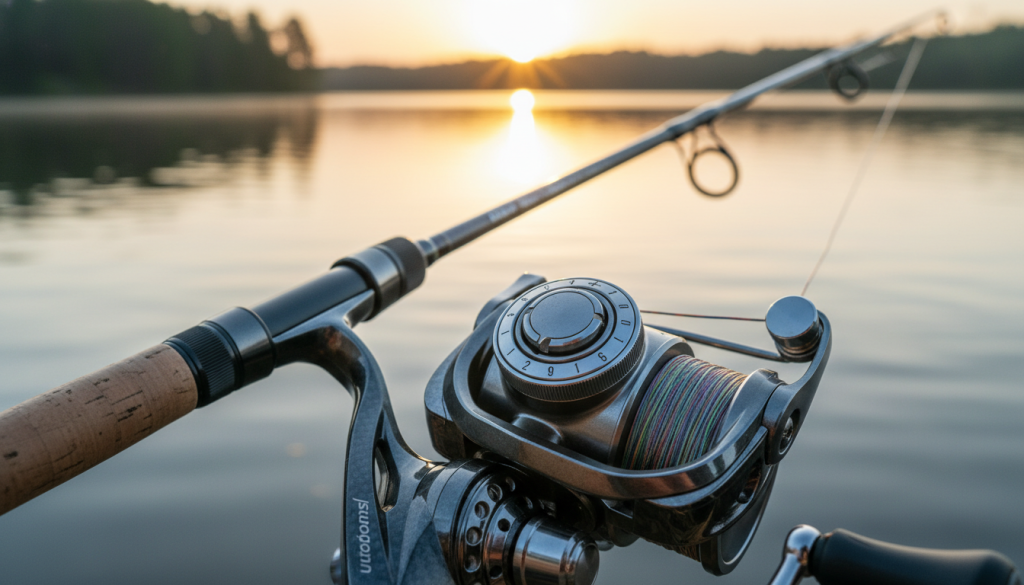
Start with the one‑third rule. Lawrence Lee recommends setting your initial strike drag to one‑third of the breaking strain on the spool. Use a spring balance to check this before you head out.
The Importance of Knot Strength
Every connection is only as good as its knot. A poorly tied knot will always be the weakest point when a fish peels line from your reel.
For joining braid to a leader, the FG knot is widely regarded as the best choice. It preserves breaking strength and holds under long, heavy runs.
- Setting your drag correctly is the most important rule to avoid snap-offs during a fight.
- Measure drag with a spring balance to one‑third of breaking strain before you start.
- Check for microscopic nicks on the main and leader; abrasion cuts are unseen killers.
- Remember that drag pressure rises as line peels from the spool—ease pressure, don’t panic.
| Setting | How to Measure | Why it Matters |
|---|---|---|
| Strike drag | Spring balance at one‑third | Protects rod, reel and spool during first run |
| Battle drag | Adjust while fighting | Controls fatigue and prevents snap |
| Knot check | Pull test before casting | Ensures knot strength and leader security |
Environmental Factors and Abrasion Resistance
Harsh coastal conditions demand different choices than calm inland waters. Your gear will wear faster near rocks, timber and heavy structure, so adapt what you spool up.
Thicker lines give better abrasion resistance around jagged reef or sunken timber, as Kosta Linardos notes. That extra diameter helps prevent cut-offs when you hook into structure.
Monofilament soaks up water and UV. Over time this weakens the material, so check and replace spools and leaders often.
- Inspect your leader after every fish; invisible nicks cause future failure.
- Store spare lines in a cool, dark place to avoid degradation from sun and salt.
- If you target deep species, pick a material with the right stretch for solid hook sets.
| Environment | Recommended material | Why it helps |
|---|---|---|
| Rocky shore | Braid + heavy leader | Thin spool capacity plus strong abrasion resistance |
| Clear coastal water | Fluorocarbon leader | Low visibility and good resistance near structure |
| Deep water | Mono or fluoro with stretch | Shock absorption and reliable hook sets |
By matching your choice to local conditions you will land more fish and save gear. Small changes to your rod setup, drag and spool make big differences on the water.
Conclusion
A careful choice of spool and leader turns uncertainty on the water into consistent catches.
Select the right line and match it to your rod and reel to get the best casting, feel and control. Check the breaking strain and the actual diameter before you spool up.
Set your drag to protect gear and give you room to work a hard run. Inspect your lines after each session, especially in rough or rocky spots.
Follow these simple tips and you’ll improve results on local rivers, estuaries and the reef. With the right rod, lines and a little prep, you’ll land more fish and enjoy every trip.