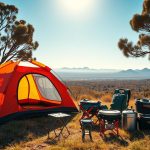
As we venture out into the great outdoors, we often find ourselves faced with one of the most daunting challenges of outdoor adventure – food storage. Whether we’re camping for a few nights or setting off on a long, multi-day hike, preserving food and keeping it fresh is an essential part of any outdoor excursion.
That’s where camping coolers come in – portable refrigeration units that have revolutionised the way we store food and drink on the go. But what are the secrets to keeping your food fresh with camping coolers? How can you ensure that your meals are not only safe to eat, but also delicious and satisfying, no matter how long your trip lasts?
In this blog post, we’ll uncover the hidden secrets to food storage with camping coolers, from ice retention and insulated coolers to food safety and beyond. So, whether you’re a seasoned outdoor adventurer or a newcomer to the world of camping equipment, you won’t want to miss this insight-filled guide to keeping your food fresh on the go.
Read on and discover the secrets to food preservation with camping coolers – your taste buds will thank you!
The use of camping coolers is essential for camping trips in order to keep food fresh and avoid any potential health risks. However, without proper care and usage, these coolers can become ineffective and cause problems.
In this article, we will explore the potential problems and solutions when it comes to using camping coolers to keep food fresh.
The first problem is inadequate insulation. If the cooler is not well insulated, it will not be able to keep the food cold for a long enough period of time. The solution for this is to use a cooler with good insulation, such as a foam-lined cooler or one with double-wall insulation.
Additionally, it is important to make sure that the cooler is properly sealed to prevent any warm air from entering.
Another problem is inadequate cooling. If the cooler is not filled with enough ice or cooling agents, the food will not be kept cold enough to remain fresh. To solve this problem, it is important to use enough ice or cooling agents to ensure that the food is kept at a safe temperature.
Additionally, it is important to check the temperature of the food regularly to make sure that it is not spoiled.
Finally, the last problem is improper cleaning. If the cooler is not cleaned properly, it can harbor bacteria which can cause food to spoil. To prevent this, it is important to clean the cooler thoroughly after each use and allow it to fully dry before storing it away.
Additionally, it is important to use a suitable cleaner to ensure that the cooler is free of any bacteria.
In conclusion, camping coolers are essential for keeping food fresh and safe during camping trips. However, improper usage and care can lead to several potential problems. By following the solutions mentioned above, it is possible to ensure that the food will remain fresh and safe for consumption.
With the right care and usage, camping coolers can be a reliable and safe way to keep food fresh while camping.
Overview of Different Types of Camping Coolers: What to Look for in a Quality Cooler
When it comes to planning an outdoor adventure, one essential item you’ll want to have on hand is a trusty camping cooler. The right cooler can make all the difference in preserving food, keeping it fresh, and ensuring food safety during your trip.
But with so many different types of camping coolers available on the market, it can be overwhelming to know what to look for in a quality cooler.
First and foremost, ice retention is a crucial consideration when it comes to any camping cooler. You’ll want to find a cooler that’s well-insulated and has a tight seal to keep ice frozen for as long as possible.
Not only does this help to preserve your food, but it also ensures that you have cold beverages on hand throughout your camping trip.
Beyond ice retention, you’ll also want to consider the size and portability of your cooler. If you’re planning a longer trip or will be camping with a larger group, a larger cooler may be necessary to accommodate all of your food and beverages.
Look for a cooler with sturdy handles or wheels to make transportation easier, especially if you’ll be trekking across uneven terrain.
Finally, outdoor adventurers should consider investing in a portable refrigeration cooler for longer trips or extended stays in areas where traditional refrigeration isn’t available. These coolers are designed to run off of a vehicle’s car battery and are a great option for storing perishable items like meat, dairy products, and fresh produce.
In short, the right camping cooler can be a lifesaver on any outdoor adventure. By considering important factors like ice retention, size, and overall portability, you’ll be able to find a quality cooler that meets your individual needs and ensures your food stays fresh and safe, throughout your trip.
Proper Care and Maintenance of Your Cooler: Tips for Extending the Life of Your Cooler
Camping and outdoor adventures are some of the most exciting and fulfilling experiences anyone can have. Exploring nature, getting away from the hustle and bustle of city life, and reconnecting with ourselves is priceless.
When it comes to food preservation and storage, camping coolers are often the go-to option. However, owning a camping cooler comes with the responsibility of proper care and maintenance, if you want to extend its life.
Proper care and maintenance of your cooler is essential if you want to keep your food fresh and safe for your outdoor adventure. Here are some tips to help you extend the life of your cooler.
Firstly, always clean your cooler after every use. It is essential to remove any food particles or debris from the cooler, as this will help prevent bacteria growth and bad odours. Use mild detergent and warm soapy water, then rinse it thoroughly with clean water and let it air dry.
Secondly, store your cooler in a cool and dry place when not in use. Exposure to direct sunlight, rain and extreme heat can cause damage to your cooler, leading to cracks and leaks. Storing it in a protective cover is also recommended to prevent scratches and damages to the outer case.
Thirdly, handle your cooler with care. Avoid dragging or dropping it, as this can lead to damage to the internal lining and seal. Always lift it from underneath and avoid carrying it by the handle alone, especially if it is loaded with heavy items.
Camping coolers are an essential piece of camping equipment. Proper care and maintenance can help you extend the life of your cooler and ensure the safety of your food. All it takes is a little care and attention and your cooler will be good to go for many more outdoor adventures to come.
How to Pack Your Cooler for Maximum Freshness: Strategies for Storing Your Food
Packing a cooler for an outdoor adventure can be a daunting task. To ensure maximum freshness of your food and snacks, there are a few important strategies to consider.
First, it’s important to choose the right camping cooler for your individual needs. Look for an insulated cooler that has a good ice retention capacity, as this will be key to keeping your food fresh. Make sure your cooler is big enough to store all the food and drinks you’ll need and is portable enough to be easily carried with other camping equipment.
Secondly, to ensure maximum freshness of your food and snacks, it is important to use the right food storage techniques. Properly wrapping your food in airtight containers or bags will help to preserve it and keep it fresher for longer.
Additionally, good ventilation will prevent the food from becoming soggy, so use dividers to create air flow when storing items in the cooler. Additionally, make sure you keep raw and cooked food separate, as this will reduce the risk of food contamination and food poisoning.
Finally, think about the type of ice you are using. Re-freezable ice packs are a great way to keep your food cold for extended periods of time. If you’re going for a longer trip, consider investing in dry ice, which can provide better cooling than regular ice cubes and last for a longer duration.
By following these simple strategies for packing your cooler, you can ensure maximum freshness and safety of your food, making for a more enjoyable and successful outdoor adventure.
Different Methods for Keeping Your Food Fresh While Camping: Pros and Cons of Each Method
When it comes to camping and outdoor adventures, it is important to have access to fresh food. This can be achieved through a variety of methods, each with their own pros and cons.
Camping coolers are a great way to store and preserve food while camping. They are typically made of durable materials that can keep food safe and retain ice for extended periods of time.
Insulated coolers can also help keep food fresh for longer by providing an additional layer of temperature control.
Additionally, portable refrigeration systems offer a more sophisticated way of keeping food fresh when camping. These systems often utilise battery power or a propane fuel source to keep food at the desired temperature. They also provide a more compact form of refrigeration that can easily be transported to different camping sites.
Lastly, traditional food storage containers are also a great way to keep food fresh and safe while out camping. These containers are usually made of lightweight materials and are easy to carry and store. They provide a more traditional form of food storage that can be used in a variety of settings.
Each of these methods for keeping food fresh while camping has its own advantages and disadvantages. Camping coolers are great for keeping food cold, but they can be quite bulky and heavy when filled with food and ice.
Portable refrigeration systems are a great way to ensure food safety and freshness, but they can be expensive and require additional power sources.
Traditional food storage containers provide a cost-effective way to store food, but may not provide the same level of protection as other methods.
Ultimately, the method for keeping food fresh while camping depends on the individual’s needs and preferences. By weighing the pros and cons of each method, it is possible to find the right solution for your camping and outdoor adventure needs.
With the right tools and equipment, keeping food fresh while camping can be a simple and enjoyable task.
Tips for Cleaning and Sanitising Your Cooler: How to Keep Your Cooler Hygienic
Camping is all about experiencing the great outdoors, but it is important not to forget that food safety and hygiene are equally essential. Investing in quality camping coolers is not only wise for preserving food and keeping it fresh, but it also ensures your safety in the wild.
Here are some tips for cleaning and sanitising your cooler to keep it hygienic and bacteria-free.
The first step is to empty the cooler and remove any remaining food items. This includes removing any leftover ice and wiping down the interior of the cooler with a damp cloth.
Next, use a mild detergent and warm water to thoroughly clean the interior and exterior of the cooler. Scrub any stubborn stains or spots with a soft-bristled brush, then rinse with clean water.
Once the cooler is clean, disinfect it with a solution of water and vinegar or bleach. Use a ratio of one tablespoon of vinegar or bleach per one gallon of water. Mix the solution in the cooler and ensure it reaches every corner of the cooler to kill any bacteria or germs. Let the solution sit for a few minutes before rinsing with clean water and drying the cooler.
It is crucial to always carry extra containers for separating foods and preventing cross-contamination inside the cooler. Label each container with the food item it contains and avoid overpacking the cooler to ensure proper airflow and ventilation.
Utilise ice packs and properly store them to maintain the temperature below 40 degrees Fahrenheit to prevent food spoilage.
In conclusion, keeping your cooler hygienic and sanitised is vital to ensuring safe and healthy meals during outdoor adventures. By following these tips, you can keep your camping cooler in excellent condition and enjoy delicious, fresh meals in beautiful natural settings.
Don’t compromise on food safety and hygiene when it comes to outdoor camping and always pack your trusty portable refrigeration equipment. Happy camping!
How to Deal with Spoiled Food in Your Cooler: Strategies for Dealing with Spoilage
If you are planning an outdoor adventure or a camping trip, having a cooler is essential for food storage and preserving food. Keeping food fresh and safe is important for any type of camping, and having the right cooler is key.
Portable refrigeration not only provides comfort and convenience, but it also should also have good ice retention and insulation to keep food safe and fresh for longer periods of time.
When selecting a camping cooler, make sure that it is suitable for the type of outdoor activity you are doing, as well as being designed for food safety and food preservation.
When it comes to dealing with spoiled food in a cooler, the first step is to identify the cause of the spoilage. Some of the common causes of food spoilage in a cooler include incorrect storage temperatures, improper food handling, inadequate insulation and inadequate ice retention.
To prevent spoiled food, make sure the cooler is the correct size for the amount of food you are carrying and check the temperature and temperature settings regularly.
Additionally, make sure the cooler is well insulated and has good ice retention capabilities. Finally, follow proper food handling techniques, such as regular cleaning, storing food in the correct containers and avoiding cross-contamination.
By following the strategies outlined above, you can ensure that your cooler stays in top condition and keeps your food safe and fresh. Investing in a quality camping cooler is an important part of any camping equipment and should not be overlooked. Not only will it help you keep food safe and fresh, but it will also help you avoid spoiled food in your cooler.
Emergency Preparedness: What to Do if Your Cooler Fails to Keep Your Food Fresh
Preserving food while camping or on an outdoor adventure can be a challenge. Having the proper camping equipment is essential to maintaining food safety and freshness.
A cooler is a great way to keep your food cold and fresh while on the go. However, if your cooler fails to keep your food fresh, there are a few things you can do to ensure your food remains safe and edible.
When purchasing a camping cooler for food storage, look for something that is insulated and has good ice retention capabilities. An insulated cooler will keep the cold air in and prevent warm air from entering, thus preserving the food items inside.
Ice retention is also important to ensure your food remains at a safe temperature. A quality cooler should be able to keep ice frozen for up to five days.
In addition to purchasing the right cooler, you should also make sure that you are properly storing the food. Keep perishable items such as meats, fish and dairy products in separate containers and on the coldest side of the cooler.
This will help ensure that the food remains at a safe temperature and stays fresh. You should also make sure to keep your cooler away from direct sunlight and hot surfaces, as this can cause the food to spoil quickly.
Conclusion
Camping coolers are an invaluable tool when it comes to keeping your food fresh while out in the great outdoors. Whether you’re fishing, camping or taking a road trip, a good quality camping cooler can keep your perishables safe and healthy and help you avoid the costly and wasteful disposal of spoiled food.
The key to using a camping cooler successfully is to purchase a quality product and to understand the science behind the cooling process. With a few simple tips, you can get the most out of your camping cooler and keep your food fresher for longer.