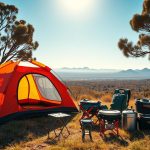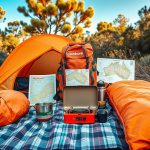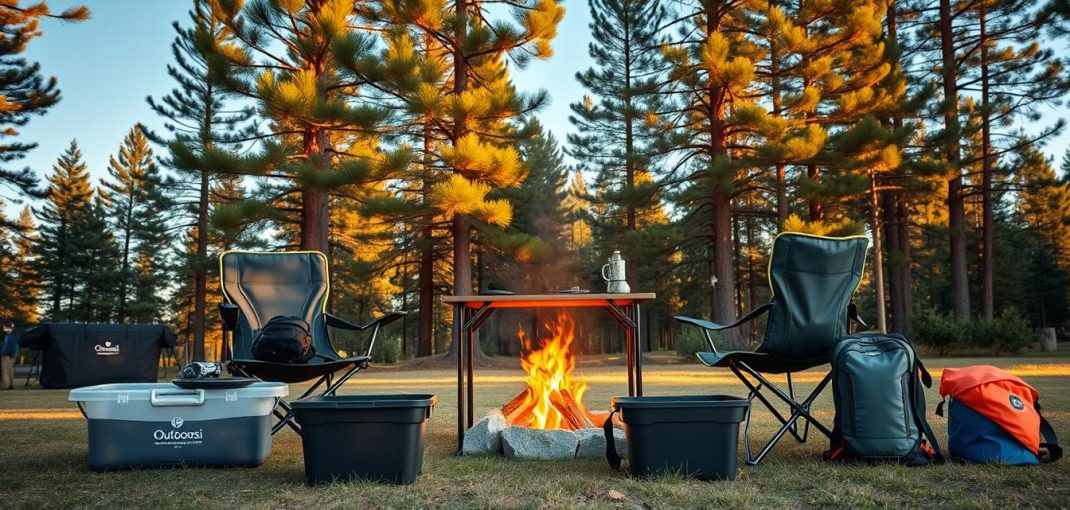
Heading out to the bush, beach or towing a caravan? This Camping furniture guide gives you clear advice to pick gear that makes your camp a comfy living space. With the global outdoor furniture market valued at USD 53.27 billion in 2024, choices are vast. You need gear that suits your trip, from lightweight chairs for hiking to sturdy tables for family meals.
Think about weight, materials and durability. Combine tents, sleeping systems, cooking equipment, portable power like Goal Zero, solar panels, lighting and a first aid kit for true off-grid comfort. Choose options that match your car camping setup or a solo adventure into remote country.
We focus on practical tips so you can pick the right camping furniture for your needs. Expect recommendations on camping chairs, tables, storage and more to improve your outdoor experience and help your kit last season after season.
Key Takeaways
- Match gear to your trip type—beach, bush, caravan or hiking—for best results.
- Prioritise quality, durability and low weight to balance comfort and portability.
- Integrate furniture with tents, sleeping systems, cooking kit and power solutions.
- Choose modular storage and stable tables to improve living space on family trips.
- Invest in reliable brands and simple first aid and lighting for safer, more comfortable outings.
Why Quality Gear Transforms Your Outdoor Experience
A well-chosen set of outdoor gear can turn a rough patch of bush into a cosy living area.
Investing in quality gear gives you the support to recharge after long hikes or a day on the road. Ergonomic chairs and sturdy tables mean you sit comfortably, not on cold or damp ground.
Good pieces create a proper living space at your campsite. That sense of home helps you relax, enjoy the fire and spend more time outside with family or mates.
When you choose durable, well-designed furniture, your car or caravan setup stays organised and works smoothly. This saves time and reduces frustration so you can stay out longer and explore further.
- Better gear prevents aches and keeps you comfortable.
- Quality items last seasons and protect your trip investment.
- Smart choices make the whole camping experience more relaxing.
Essential Categories in Our Camping Furniture Guide
Choose the right kit and your camp becomes a tidy, comfy living spot. This section breaks down the core categories so you can pick items that match your trip and group size.
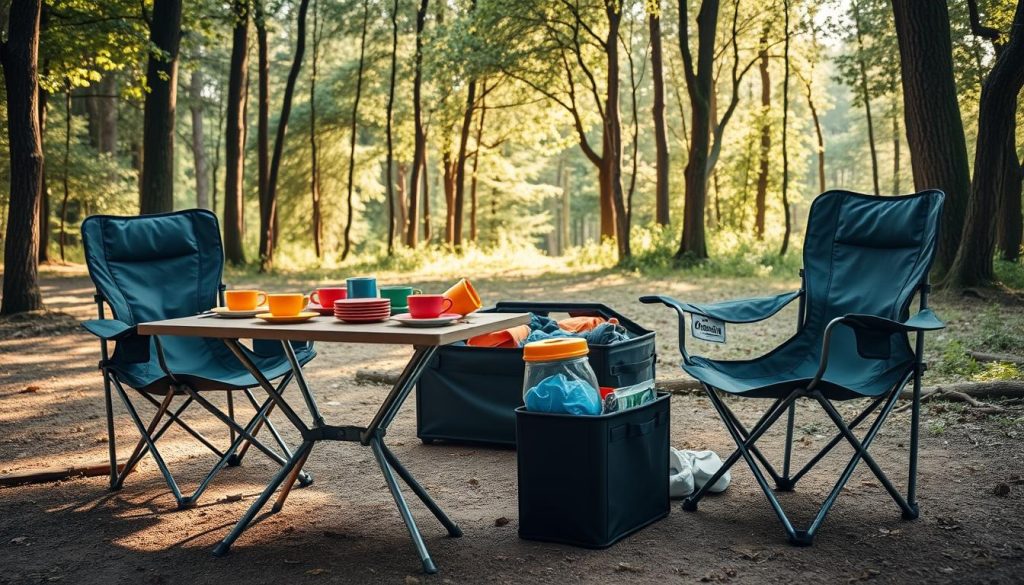
Chairs for Every Camper
Comfort matters. Look for seats with good support, durable material and built-in cup holders for a long day by the fire.
Tables for Prep and Dining
Tables need the right size and sturdy legs to stay stable on uneven ground. Choose materials that balance weight and durability.
Storage Solutions for Organized Campsites
Storage items like cupboards and wagons keep gear off the ground and safe from weather and wildlife. They also free up space so your site feels like home.
- BCF experts name five must-haves: chairs, tables, beach carts, camping kitchens and cupboards.
- Easy-set options save time at setup and pack-down.
- Durable items give stable support for family meals and activities.
| Item | Best for | Key feature | Typical weight |
|---|---|---|---|
| Director chair | Relaxing by camp | High back, cup holders | 2.5–4 kg |
| Folding table | Meal prep & dining | Adjustable legs, hard top | 3–6 kg |
| Camping cupboard | Organising gear | Shelves, weather cover | 4–8 kg |
Matching Your Setup to Your Australian Adventure Style
Your choice of gear should reflect whether you’re hiking light or driving a fully loaded rig. That decision shapes the size, weight and features you need for a safe, comfy trip.
The Ultralight Backpacker Approach
For ultralight hiking, every gram counts. Aim for chairs and tables that fold small and weigh almost nothing.
Minimalist pieces give you essential support without bulk. Look for quick-fold designs and slim frames that sit off the ground but pack down tiny.
Car Camping and Family Comfort
When you drive, you can prioritise comfort and convenience. Larger chairs with integrated cup holders and stable tables make long days easier.
Family trips need durable, easy-clean surfaces and sturdy construction. Choose gear that withstands rough play and keeps your space organised.
- Ultralight: tiny size, low weight, basic support for long hikes.
- Car camping: roomy chairs, cup holders, heavier tables for cooking and dining.
- Family: robust, easy-clean, child-safe features and modular storage.
| Style | Key features | Typical weight | Best for |
|---|---|---|---|
| Ultralight backpacker | Compact chair, quick-fold table, minimal frame | Under 1 kg (per item) | Long hikes, multi-day treks |
| Solo/Car camper | Comfort chair with cup holders, mid-size table | 1–4 kg | Short trips, scenic day stays |
| Family basecamp | Sturdy table, large chairs, modular storage | 4–12 kg (items) | Extended stays, family outings |
Decoding Materials for Durability and Weight
Knowing what your kit is made from helps you pick items that last and carry well.
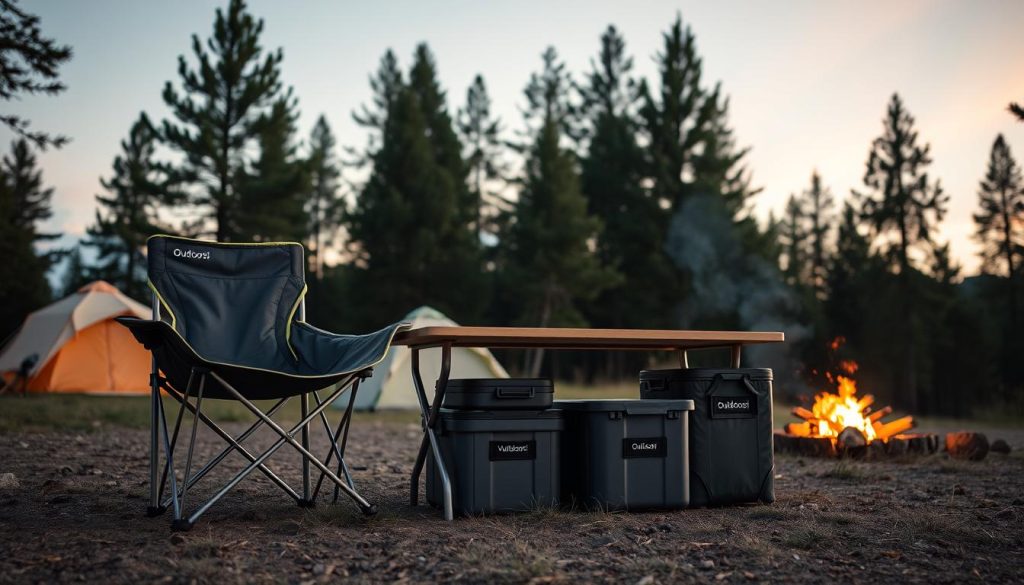
The Role of Frames and Fabrics
Aluminium offers an excellent strength-to-weight ratio. Think of it like an airplane skeleton—strong but light. This makes it ideal when low weight matters for hikes and longer trips.
Steel is heavier but tough. Choose steel for car trips where extra strength and stability on rough ground matter more than carrying weight.
Ripstop nylon is the go-to fabric for seats and pockets. It resists tearing, dries fast and keeps overall weight low. Look for UV-resistant and water-repellent finishes to extend life.
- Check joints and stitching—they reveal long-term quality.
- Select frames based on the type of trip: aluminium for hiking, steel for basecamp.
- Match fabric features to your climate and expected wear.
| Material | Strength | Typical use | Weight impact |
|---|---|---|---|
| Aluminium | High | Hiking chairs, light tables | Low |
| Steel | Very high | Car camp tables, heavy seats | High |
| Ripstop nylon | Medium (tear-resistant) | Chair seats, storage pockets | Minimal |
Pro Tips for Maintaining Your Outdoor Equipment
A little attention after each trip makes a big difference to how long your items last.
Clean fabric with mild soap and water, rinse well and air dry. That simple step stops salt, mud and sweat from breaking fibres and protects the material finish.
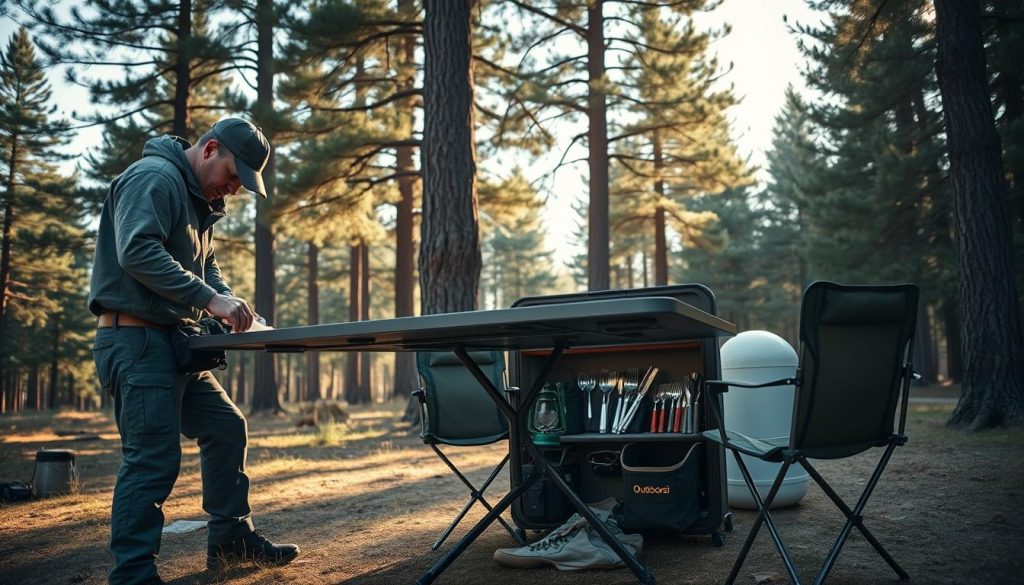
Check chairs and tables for dents, bent legs and loose rivets after intense use, whether you were hiking or on a long car camping weekend.
Store gear in a cool, dry spot to prevent mould and corrosion. Storing collapsed items saves space and cuts the chance of damage in transit.
Inspect joints and stitching regularly. These are common failure points and fixing them early avoids bigger repairs later.
| Task | Frequency | Why it matters |
|---|---|---|
| Clean fabric | After each trip | Removes contaminants that reduce lifespan |
| Check frames & fastenings | Every trip | Finds bends, cracks and loose bolts early |
| Dry & store | Before long-term storage | Prevents mould, rust and saves space |
With the portable market growing (USD 6.3B in 2023 to an estimated USD 11.5B by 2032), regular care protects your investment and keeps gear ready for family trips and day outings.
Conclusion
Smart choices in gear mean more time enjoying the view and less time fixing problems.
Choose the right camping furniture to suit your adventure style and group size. Pick chairs and a table that match weight needs, durability and comfort so your trip is easier and more relaxing.
Quality gear is an investment. It gives reliable support across seasons and reduces hassle on long trips into the bush or coastal getaways.
Prioritise durability and function when weighing options. With the right camping kit in hand, your next Australian adventure will feel more comfortable, organised and ready for memories.