You head into the bush to unwind, but staying connected matters. This short intro helps you pick the right system so your phone, tablet and fridge keep running without drama.
Modern portable power kits combine solar panels and battery boxes to keep you self-sufficient for longer. Choosing the right source depends on how many appliances you use and how long you stay.
Proper planning prevents the frustration of flat batteries in remote spots. Whether you’re a weekend traveller or on an extended trip, understanding your energy needs is the first step to a relaxed trip across Australia.
This practical guide gives clear, expert tips so you can compare options, size your setup and enjoy safe, reliable power while exploring the outback.
Key Takeaways
- Match your energy use to the size of the battery and solar array.
- Combine solar and battery boxes for longer off-grid stays.
- Plan for communication devices and essential appliances first.
- Shortlist gear that is reliable and easy to service in Australia.
- Small, practical setups often beat oversized, complex rigs.
Why You Need Reliable Camping Power Solutions
Heading off-grid in Australia demands a reliable way to keep essentials running.
Reliable power keeps your fridge cold and your lights on during family trips. It also lets you enjoy simple comforts like a coffee machine or tablet when you’re miles from civilisation.
Having a portable power source gives you the freedom to camp deep in the bush or set up at a quiet beach without stress. Choosing the right products for your setup means fewer surprises and less gear failure on long stays.
- Plan for how long your trip will be and what appliances you need.
- Match product capacity to fridge, lights and device use.
- Pick options that are reliable and serviceable in Australia.
| Scenario | Key Need | Best Choice |
|---|---|---|
| Family weekend | Lighting & fridge | Compact battery box |
| Outback trip | Long runtime | Large portable power kit |
| Coastal stay | Devices & comforts | Solar-ready products |
Our short guide helps you weigh options so you make the right choice for your next camp trip, avoiding costly mistakes and ensuring a relaxed holiday.
Assessing Your Energy Consumption Requirements
Start by tallying what you’ll run and for how long. This simple audit helps you match gear to your family’s needs and avoids flat batteries mid-trip.
Calculating Watt-Hours
Multiply an appliance’s watts by the hours you plan to run it each day to get watt-hours (Wh).
Example: a 60W light for 5 hours = 300Wh per day. Add each item to find total daily energy use.
Use this total to compare with battery Wh capacity and the output of solar or charging gear you plan to use.
Understanding Amp-Hour Ratings
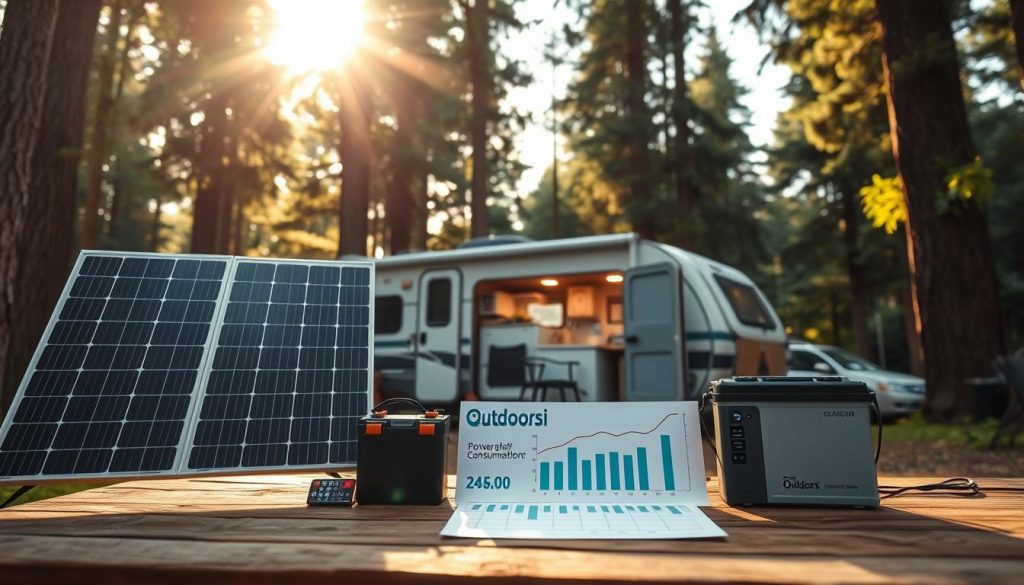
Amp-hours (Ah) describe battery charge. Convert Ah to Wh: Wh = Ah × volts. For a 12V battery, 100Ah ≈ 1,200Wh.
Remember AGM batteries: follow a 50% discharge rule. A 100Ah battery typically gives about 50Ah usable.
Fridges are often underestimated. A 40L fridge can draw 0.5–2.6A per hour depending on conditions, so include worst-case figures.
- Tip: Total daily Wh must not exceed battery usable Wh or you risk spoilage and downtime.
- Tip: Factor in charging efficiency and reserve capacity for lights and devices.
| Item | Typical Draw | Run Time (hrs/day) | Daily Wh |
|---|---|---|---|
| LED lights (4 × 10W) | 40W | 5 | 200Wh |
| 40L fridge | 0.5–2.6A (12V) | 24 (intermittent) | 144–748Wh |
| Phone & tablet charging | 20W | 3 | 60Wh |
| Portable coffee maker | 600W | 0.2 | 120Wh |
The Role of Mains Power at Campgrounds
Staying at a powered site gives you straightforward access to 240V mains that feel just like home. This lets you run kettles, microwaves and fridges without worrying about battery limits.
Many families and caravan travellers choose powered sites so all appliances work reliably. If you have a large family, mains supply makes meal prep and device charging simple.
For new campers, connecting to mains is the easiest way to manage energy. Use high-quality extension leads and surge-protected power boards to distribute electricity safely around your van or tent.
- Check the site’s amperage to ensure it can handle your caravan appliances.
- Keep batteries topped up via mains so they’re ready for short trips away from the campground.
| Scenario | Best Use | Tip |
|---|---|---|
| Family caravan stay | Run multiple high-draw appliances | Confirm amperage before plug-in |
| Mixed tent & van groups | Charge devices and small kitchen gear | Use RCD-tested leads and boards |
| New campers | Simplify energy management | Prefer powered sites for convenience |
Portable Generators for Off-Grid Comfort
If you plan remote stays, a portable generator offers predictable energy when sunlight falls short. It’s a reliable source for recharging batteries and keeping a fridge running on long bush trips.
Why pure sine wave matters
Pure sine wave inverters protect sensitive devices like laptops and modern fridges from voltage spikes. That protection reduces the risk of damage when the generator feeds electronics.
Practical tips for remote use
- Fuel efficiency: automatic throttle settings cut fuel use and trim noise during light loads.
- Noise: check the dBa rating so your unit fits local rules and keeps the camp quiet.
- Safety: never run a generator indoors; carbon monoxide is deadly. Always place it in a dry, well-ventilated spot.
| Feature | Benefit | Quick tip |
|---|---|---|
| Pure sine inverter | Safe for sensitive devices | Look for true sine specs |
| Auto-throttle | Longer run time, less noise | Test under light and heavy loads |
| High output range | Runs multiple appliances | Match output to your needs |
Maintenance keeps a generator reliable on extended trips. Regular servicing and dry storage will ensure it performs when solar falls short and you need hours of steady output.
Harnessing Solar Energy for Sustainable Camping
A good solar setup removes much of the guesswork when you head off-grid for days at a time. It keeps your battery topped up so your fridge and devices run reliably in the bush or on a beach stay.
Rigid Panels vs Solar Blankets
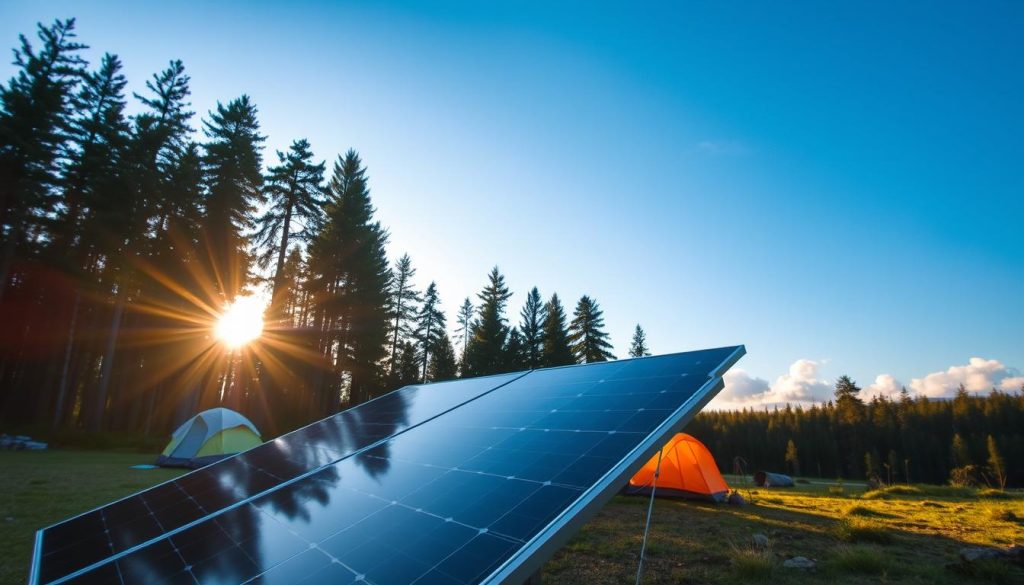
Rigid panels suit roof mounting on a caravan or trailer. They’re durable and cost-effective for long-term use.
Solar blankets are lightweight and flexible. You can drape them over a windscreen or hang one from an awning to follow the sun.
Optimizing Panel Placement
Point panels at a 90-degree angle to the sun when possible; that markedly boosts output. A 160W panel can yield about 53Ah on a sunny day with six direct sunlight hours.
Avoid partial shading from gum trees or roof racks — even small shadows can collapse output.
Increasing Efficiency
- Keep panels clean: dust and salt can cut output by 20% or more.
- Charge a battery, not appliances directly, for stable supply and longer system life.
- Even cloudy days provide a useful trickle to extend off-grid life.
| Type | Best for | Drawback |
|---|---|---|
| Rigid panel | Roof mount, long trips | Heavier, fixed |
| Solar blanket | Fold-away, flexible setup | Less durable |
| Hybrid | Mix of both | Higher cost |
Comparing Battery Systems and Portable Power Stations
Your choice of battery system shapes how long fridges, lights and devices will run on a weekend or longer trip.
Lithium batteries are the modern gold standard. They weigh about half of AGM equivalents and allow near 100% depth of discharge. That means more usable capacity for the same weight in your camper trailer or vehicle.
A 44Ah deep-cycle AGM is a common, budget-friendly pick for short weekend camping trips. Remember: AGMs should generally only be discharged to 50% to preserve long-term health.
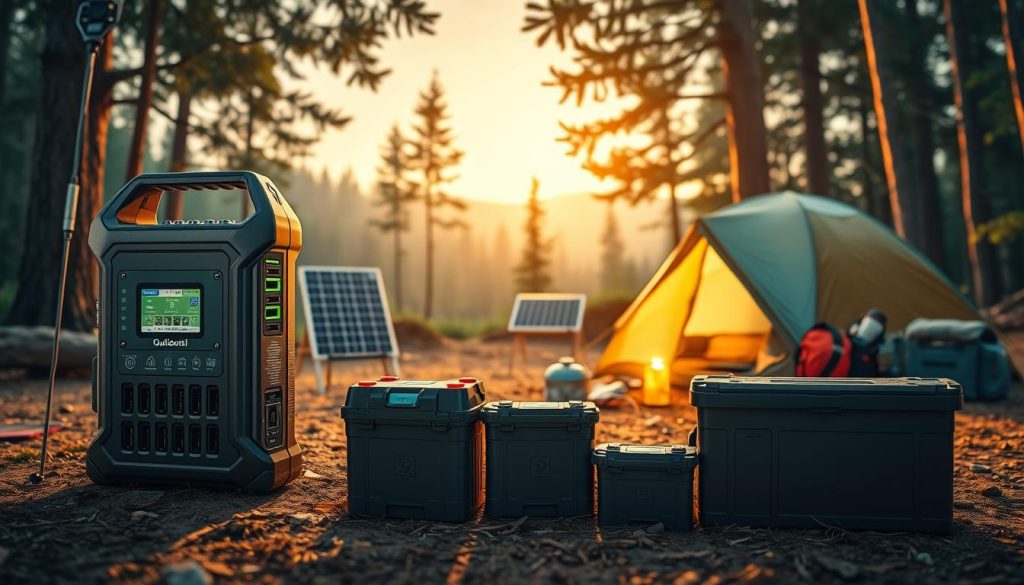
Portable power stations bundle a lithium battery, solar regulator and inverter in one box. They suit simple setups and quick charging from solar panels or a vehicle alternator.
- Dual battery setups keep your starter battery separate from house batteries that run fridges and appliances.
- Battery boxes offer modular flexibility; always measure internal dimensions before buying a new battery.
- For extended off-grid use, upgrading to lithium batteries is often the smartest, long-term choice.
| Option | Best for | Key drawback |
|---|---|---|
| 44Ah AGM | Short trips, budget setups | Usable capacity ~50%; heavier |
| Lithium battery | Long trips, camper trailer, weight-sensitive rigs | Higher upfront cost |
| Portable power station | Simple, plug-and-play systems | Limited expansion vs dedicated battery banks |
| Dual-battery vehicle system | Caravan/4WD that charges on the move | Needs proper isolator and wiring |
Essential Accessories for Your Electrical Setup
A reliable internet link makes managing devices and safety checks straightforward on the road. Add a few smart accessories and your caravan or trailer becomes far more self-sufficient and easy to run.
Starlink and data connectivity
Starlink Gen 3 is a popular pick for remote campers who need steady data while living off-grid. In Tamworth, NSW, Camping Power Solutions specialises in installing Starlink for caravans, camper trailers and motorhomes to keep you connected.
Fit a quality mounting kit so the dish stays secure in wind. Use waterproof ethernet ports and 12V DC converters to integrate Starlink into your existing electrical system safely.
- Cable management: run cables through dedicated conduits to protect them from weather and bites.
- Monitoring: stable data lets you use apps to track battery status, solar inputs and usage remotely.
- Safety tools: pack spare fuses and basic electrical tools for quick roadside fixes.
| Accessory | Why it matters | Quick tip |
|---|---|---|
| Mounting kit | Keeps dish stable in gusts | Choose marine-grade fittings |
| Waterproof ethernet port | Protects link from moisture | Place above likely waterline |
| 12V DC converter | Integrates Starlink with your battery | Match voltage and surge specs |
With the right accessories, you can check weather maps, receive updates and monitor your system from anywhere. This small investment makes a big difference to comfort and safety during remote stays.
Safety Protocols for Handling Camping Power
Simple habits around batteries and generators make every trip safer and less stressful. Follow basic rules and you’ll protect your family, gear and campsite.
Charging & battery care: never leave a battery on charge for long when you’re not using it. Avoid storing batteries in a parked vehicle on a hot summer day. If you use a lithium battery, check the charger matches the voltage and chemistry to prevent overcharging or fire.
Generator and fuel safety: always run generators outdoors in well-ventilated areas to avoid carbon monoxide buildup. Keep children and pets away while the engine runs; surfaces get very hot.
- Inspect wiring and terminals for frayed cables or loose connections before each trip.
- Use heavy-duty extension cords for appliances to reduce overheating risks.
- If you spot battery leakage, do not touch the liquid; battery acid is corrosive. Seek professional help.
| Risk | Action | Why it matters |
|---|---|---|
| Overcharging | Disconnect after charging | Prevents overheating and damage |
| Carbon monoxide | Only run generator outside | Stops deadly gas build-up |
| Hot vehicle storage | Store batteries in shade | Extends battery life and safety |
This short guide helps you set up a safe system so lights, appliances and devices run reliably each day. Quick checks and good habits keep trips relaxed and hazard-free.
Managing Power During Different Australian Camping Scenarios
Different trips need different setups — a beach day calls for corrosion-safe panels, while a bush stint needs self-sufficiency.
Beach and Bush Camping
At the beach, protect solar panels from salt spray and rinse connections after each day. Salt corrodes terminals and cuts efficiency over time.
In the bush, run a dual battery system with a portable panel to keep a fridge and lights running for days. Carry a portable jump starter as a backup source for emergencies.
Caravan and Trailer Setups
Rooftop solar panels paired with a large lithium battery bank work well for long caravan stays. Secure and ventilate the battery box in your camper trailer to avoid heat build-up in summer.
For family trips, size the system to cover fridges, lights and devices across the day. If you hike, take a lightweight power bank for GPS and phones when vehicle access is unavailable.
- Tip: always make sure your system capacity matches your expected use and range.
- Tip: carry small accessories for charging and fuse replacement to keep fridges and appliances running.
| Scenario | Recommended setup | Quick note |
|---|---|---|
| Beach | Foldable panel + sealed connectors | Rinse salt daily |
| Bush | Dual battery + portable panel | Keep fridge runtime high |
| Caravan | Rooftop panels + lithium bank | Secure ventilated battery box |
Conclusion
The right kit and a little planning let you stay off-grid without losing comforts. Match your setup to how you use devices and appliances, and you’ll avoid flat batteries and wasted trips to town. This keeps the fridge cold and devices charged when you need them most.
Use this short guide to size panels and choose a battery that fits your routine. Prioritise safety when handling generators and lithium units. A neat, well-tested system reduces stress and saves time on every trip.
You’ll enjoy more of the Australian outdoors when your campsite runs smoothly. Keep gear maintained, check connections before you head out, and you’ll get many reliable outings from your investment.