Standup paddling, or SUP is one of the fastest growing water sports in the world. It’s no wonder, then, that first-time riders have so many questions. In this blog post, we’ll explore the basics of SUP and provide some tips for first-time riders. Keep reading to learn more!
How to get started with paddleboarding.
Are you considering trying out paddleboarding for the first time? Paddleboarding has become an increasingly popular activity around the world and the best part is you don’t need any prior experience or special skills to get started. All you need is the right equipment and a little bit of knowledge.
To get started with, you’ll need a board, paddle and personal flotation device. The size of the board you choose should be based on your weight and skill level. When selecting a paddle, you should look for one that is adjustable and lightweight. As for personal flotation devices, many boards come with built-in features that provide buoyancy in the water.
Lastly, you should also consider investing in a high-quality leash that will help keep you connected to your board.
Once you have all the necessary equipment, it’s time to hit the water. Before heading out, it’s important to familiarise yourself with basic paddleboarding techniques. This will not only help you stay safe but also ensure you have an enjoyable experience.
For example, you should practice proper paddling techniques, such as using your core to power your strokes and keeping your paddle parallel to the board.
You should also take the time to learn how to stand up on the board, as well as how to turn and manoeuvre in different directions. With a little practice, you’ll be paddling like a pro in no time!
What supplies are needed for paddleboarding.
If you are new to paddleboarding, you might want to get some items that will make it easier to navigate.
Right paddle: The right paddle is longer and straighter so that it will clear the water more easily.
Left paddle: A left paddle is shorter and bigger since it will be used only to turn and to steer the board.
Board leash: An ankle leash will help keep you attached to the board if you get knocked off while trying to catch a wave. It will not keep you on the board, if you are falling or tipping over.
Life jacket: A life jacket will help keep you safe if you get knocked over, but also keep you afloat in case you cannot get back on.
Paddle: A paddle will help keep you afloat in case you fall off.
What to look for when purchasing a paddleboard.
When it comes to paddleboarding, it can be overwhelming for first-time riders to decide what type of board to purchase. Many factors can influence the decision such as size, design and weight. The size of the board should be determined by the rider’s weight, as well as the type of riding they are doing.
For instance, if someone weighs less than 130 lbs they should generally choose a 10-foot or smaller board, while someone who weighs more than 130 lbs should select a board that is at least 11 feet.
The design of the board should be dependent on the rider’s skill level. Stability and manoeuvrability are the two main characteristics of paddleboards to consider. Beginner riders should select an all-around board which is wider, thicker and provides more stability on the water.
More experienced riders can choose a touring board, which is narrower, thinner and more manoeuvrable.
When it comes to the weight of the board, it needs to be light enough for the rider to carry. Typically, lighter boards are more expensive, but in return they are more manageable and easier to handle. The best way to determine the right weight of the board is to try a few out in-person before making a purchase.
Keeping these factors in mind can help first-time riders find the perfect paddleboard.
How to choose the right board for paddleboarding.
Paddleboarding is an exciting way to enjoy the ocean, a lake, or a river and choosing the right board is the first step to an enjoyable experience. First-time riders should look for a board that is wide, stable and durable; these qualities will make it easier to stay upright and have a good time on the water.
For instance, an all-around board is ideal for novice riders and should be 10’ to 12’ long and 30” to 34” wide. Stand-up paddleboard types vary in shape, size, materials and construction. Inflatable paddleboards are a great option for first-time paddleboarders as they are lightweight and easily transportable.
As for construction, boards can be made from a variety of materials including fiberglass, plastic, inflatable and epoxy.
For instance, fiberglass boards are the most common type and are usually the most expensive. They are lightweight, durable and offer great performance in all water conditions. Plastic boards are a good option for beginners as they are more durable and affordable. Lastly, epoxy boards are the most expensive and offer great durability, performance and stability.
When it comes to paddleboarding, the right board depends on the type of water you’ll be paddling in and your own personal preferences. Consider the size, construction and materials of the board before making a decision.
Do some research and talk to experienced paddleboarders to find the right board for you.
With the right board, you can have a great time and explore the waters like never before.
Safety tips for paddling for the first time.
If you are a first-time rider of a paddleboard, you may be feeling a bit intimidated. But don’t worry, it is surprisingly easy and safe for first-time riders. To ensure your safety, here are a few tips to get you started.
First, make sure you are familiar with the basics of paddleboarding. Get to know the different types of boards, paddles and safety equipment, as well as how to properly adjust the board and paddle for your height and weight.
Additionally, make sure you understand the basic rules of the water, such as avoiding areas where boats or swimmers may be present.
Second, practice in shallow, sheltered waters before attempting more advanced sailing. This will allow you to get accustomed to the feel of the board and give you the confidence you need to venture out into deeper waters. Lastly, wear a personal flotation device (PFD) at all times.
It’s is a relatively low-risk activity, but it’s important to be prepared for any unexpected situations that may arise while out on the water.
With these safety tips in mind, you’ll be ready to experience the joys of paddleboarding. Have fun and stay safe!
How to paddle, balance and steer a paddleboard.
Paddleboarding is a popular, emerging water sport that provides a great workout and a cool way to explore the water. For first-time riders, the basics of paddleboarding can seem intimidating – from learning to balance on the board to navigating the waters.
However, with just a few tips and practice, new riders can learn to paddle, balance, and steer a paddleboard like a pro.
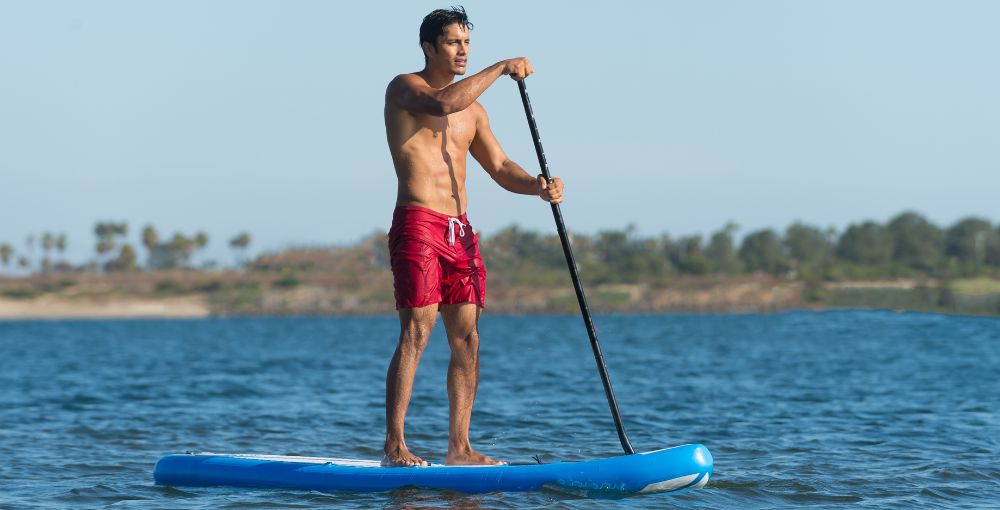
The first step is to get comfortable with the paddle itself. Holding the paddle correctly and utilising the right techniques for paddling can make or break your experience. When paddling, the paddle should be positioned parallel to the board, with your arms slightly bent.
Next, use long, deep strokes, pushing the blade through the water and pulling it back with each stroke. With practice, your paddling speed and efficiency will improve.
Once you’ve perfected your paddling technique, the next step is to practice balancing on the board. To get started, kneel on the board and shift your weight so that you are centred. Once balanced, stand up on the board and try to maintain your balance. As your board rocks back and forth, try to move your feet to shift your weight in the opposite direction.
With practice, you’ll be able to stay balanced with ease.
Finally, you’ll need to learn how to steer your board. To do this, simply move the paddle in the opposite direction you want to go. As you paddle, be sure to keep your body centred and your paddle close to the board. With a little practice, you’ll be able to manoeuvre your board in any direction with ease.
With these few tips, you’ll be well on your way to paddling, balancing and steering a paddleboard like a pro. So grab a board and get out on the water!